Uneven Tire Wear Causes
Ever looked at your tires and thought, “Why does one side look way worse than the other?” You’re not alone! Uneven tire wear is one of the most common car issues drivers face, and it can sneak up on you fast. In fact, poorly maintained tires contribute to more than 11,000 crashes every year—pretty wild, right?
In this guide, we’re breaking down uneven tire wear causes in simple, everyday language. I’ll walk you through the real reasons your tires wear out unevenly, what each pattern means, and how you can fix (or avoid!) the problem without stressing out. Whether it’s alignment issues, tire pressure mistakes, or suspension problems, you’ll know exactly what to look for.
Let’s jump in and save those tires!
What Uneven Tire Wear Really Means (Explained Simply)
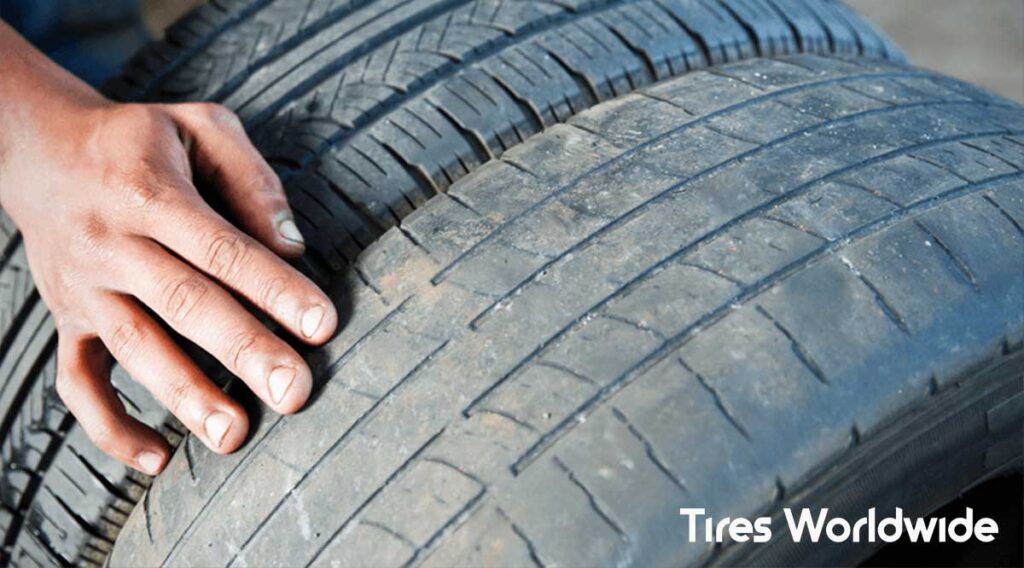
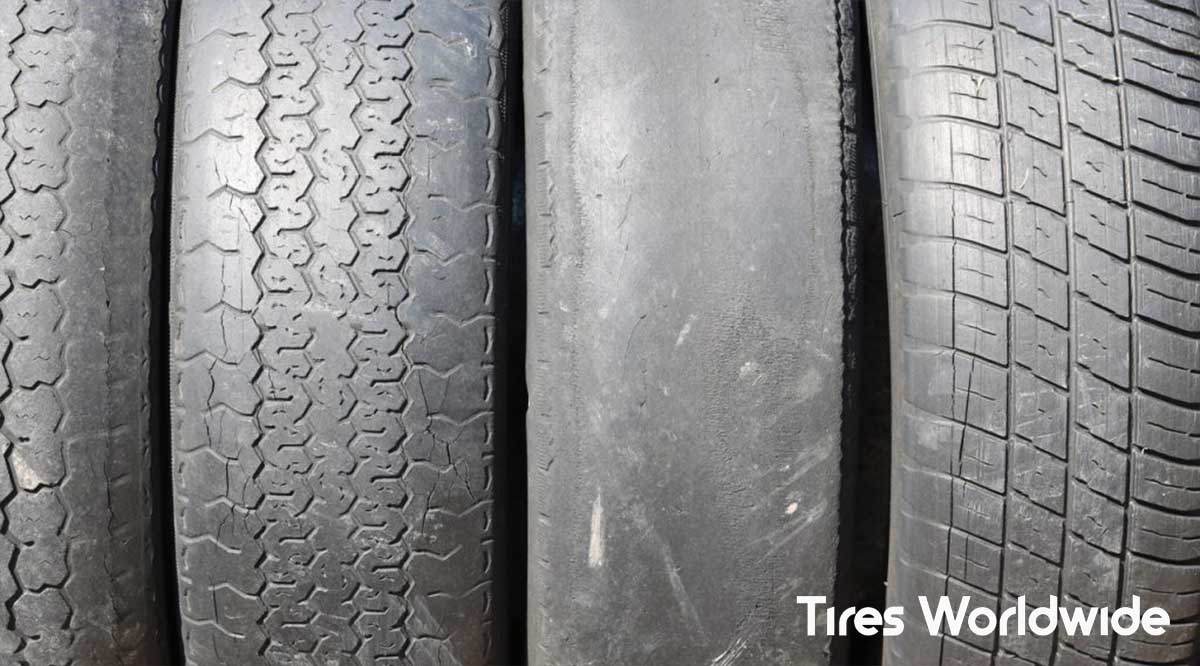
Uneven tire wear might sound like a big car problem, but honestly, it’s way easier to understand than most people think. It simply means your tires aren’t wearing down the same way across the surface. One part fades fast while another part still looks new. And when that happens, it’s your car’s way of saying, “Hey, pay attention!”
You might see the inside of the tire wearing out.
Or maybe the outside edge looks smooth.
Sometimes it’s little cups or dips across the tread.
No matter how it shows up, uneven tire wear always points to something that needs fixing.
The crazy part? Your car can feel totally normal while this is happening. You may not feel anything at all until the problem gets bigger. But uneven tire wear is a warning sign you don’t want to ignore, because it can affect traction, braking, fuel use, and even your car’s safety.
If you want a visual guide to compare your tire wear, this one from Discount Tire is legit and super easy to follow:
https://www.discounttire.com/learn/tire-tread-depth
Let’s break this down even more.
Common Symptoms You Should Watch For
You don’t have to be a mechanic to spot uneven tire wear. Trust me, once you know what to look for, it becomes really simple.
Here are some of the most common signs:
- You see uneven spots on the tread. One area looks worn out while the rest looks fine.
- Your car starts pulling to one side. It doesn’t drive straight unless you correct it.
- Your steering wheel shakes or feels “off.” Even slight vibration can mean uneven wear or balance problems.
- You hear odd noises. Sometimes uneven wear makes a humming or wobbling sound when you drive.
- Your car feels rough on the road. It just doesn’t glide the way it used to.
If any of these things are happening, it’s worth checking your tires. It takes two minutes and can save you a lot of trouble down the road.
Why Uneven Wear Is a Safety Issue
This part is important. Uneven tire wear isn’t just a cosmetic problem. It can make your car less safe, even if it still “feels fine.”
Here’s why:
- Less grip on the road. Your tires can’t grab the pavement the way they should.
- Longer stopping distance. This becomes a big deal in rain or bad weather.
- Higher chance of a blowout. Worn spots weaken the tire, and that can lead to sudden failure.
- More money spent over time. Uneven wear makes tires die early, so you replace them sooner.
- Strain on other car parts. Your suspension, alignment, and steering can all get stressed.
Safety is the main reason to care about uneven wear. Once you fix the cause, you’ll get a smoother ride, better fuel economy, and way more peace of mind.
Most Common Causes of Uneven Tire Wear
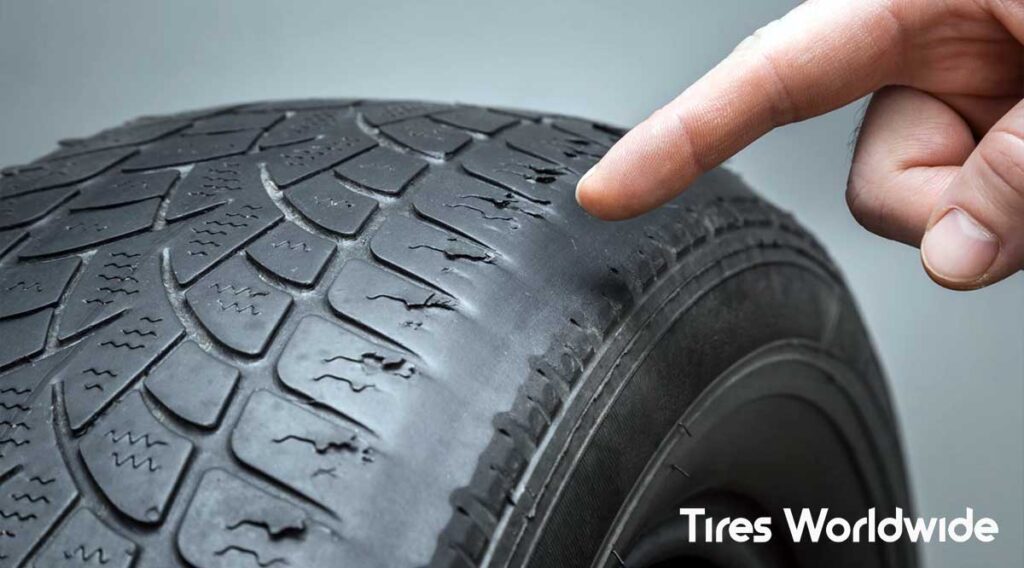
Uneven tire wear doesn’t just happen out of nowhere. There’s always a reason behind it, and most of the time, it’s something you can fix pretty easily once you know what’s going on. Think of your tires like shoes. If you walk funny or put extra weight on one side, the soles wear down unevenly. Tires do the same thing!
Let’s look at the biggest causes so you can spot the problem early and stop the wear before it gets worse.
Incorrect Tire Pressure
This is one of the sneakiest and most common causes of uneven tire wear. And the crazy part? It’s also the easiest one to fix.
When your tires are overinflated, the pressure pushes the center of the tire down harder on the road. That makes the middle wear out faster than the edges.
When they’re underinflated, the opposite happens. The sides get squished into the road more, so the edges wear out faster.
And guess what? Most people are driving with the wrong tire pressure and don’t even know it.
Here’s what you should do:
- Check your tire pressure every month (it takes less than two minutes).
- Don’t use the number on the tire sidewall. That’s the max pressure, not the recommended pressure.
- Use the sticker inside your driver’s door for the correct PSI.
- Check pressure when the tires are cold, not after driving.
It’s simple. It’s quick. And it can save your tires from dying way too early.
Wheel Alignment Problems
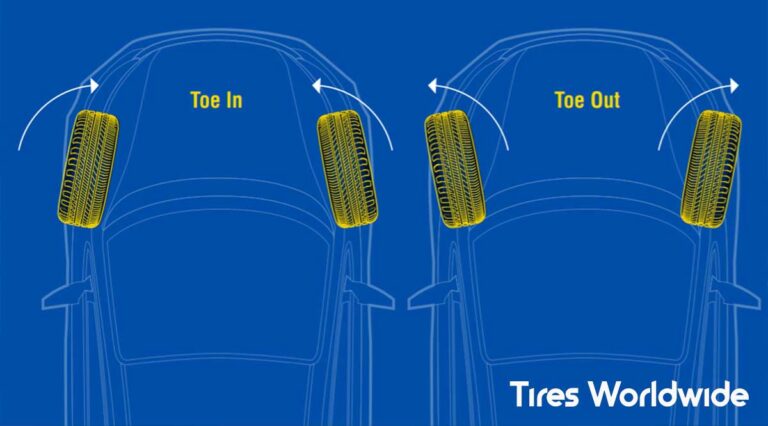
If your wheels aren’t pointed in the right direction, your tires will drag, scrub, and wear out in all the wrong places. Wheel alignment affects three things: toe, camber, and caster. Sounds fancy, but don’t worry — it’s easier than it sounds.
Here’s the simple version:
- Toe problems make your tires “fight” each other, like walking with your feet turned in or out.
- Camber problems make the tire lean inward or outward and wear one edge faster.
- Caster problems affect steering feel but can also add stress to the tires.
You might need an alignment if:
- Your car pulls left or right.
- Your steering wheel isn’t straight when driving.
- Your tires show inside or outside edge wear.
- You hit a big pothole recently (this happens a lot).
Getting your alignment checked once a year can make your tires last way longer.
Worn or Damaged Suspension Parts
Your suspension keeps your car stable and your tires flat on the road. But when suspension parts start wearing out, they let the tires bounce, shake, and move in ways they shouldn’t. That leads to uneven wear fast.
The main parts that cause trouble are:
- Shocks and struts
- Ball joints
- Control arm bushings
- Tie rods
When these parts weaken, your tires can “hop” or bounce on the pavement. That creates patterns like cupping or scalloping.
Here are some signs your suspension might be the issue:
- Your car feels bouncy when you hit bumps.
- The front end dips when you brake.
- You hear clunking or rattling noises.
- Your tires show random dips or smooth patches.
Suspension parts wear out slowly over time, so don’t ignore weird noises or changes in how your car feels.
Unbalanced Tires
Tire balancing isn’t something most people think about, but it has a huge impact on how your tires wear. If your tires aren’t balanced correctly, one spot on the tire gets hit harder every time the wheel spins. Over time, that creates uneven patches or vibrations.
You may need balancing if:
- Your steering wheel shakes at certain speeds.
- Your seat or floorboard vibrates.
- You see cups or dips in the tread.
- You recently put on new tires and didn’t get them balanced.
Balancing is fast, cheap, and can add thousands of miles to your tires.
Specific Tire Wear Patterns (What Each One Means)
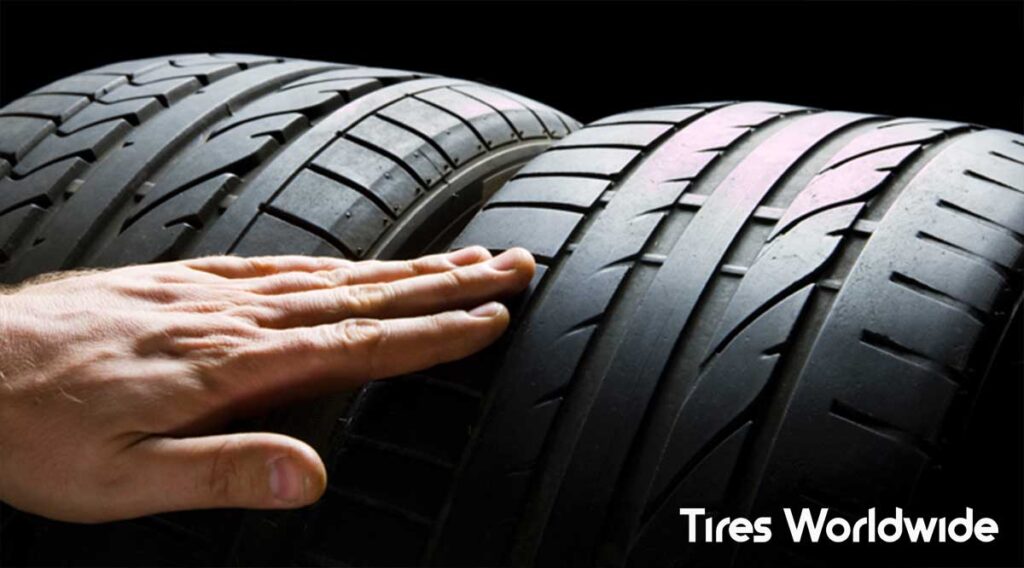
Tire wear is like a message from your car, and each pattern means something different. Once you learn what these patterns look like, you’ll be able to spot problems early and fix them before they get worse. It’s kind of like reading clues — your tires are literally telling you what’s going on!
Let’s break down the most common types of uneven tire wear so you know exactly what they mean.
Inner Tire Wear
Inner tire wear happens when the inside edge of the tire wears out faster than the rest. This can be easy to miss because you don’t always see the inside unless you bend down or turn the steering wheel.
Here’s what usually causes inner tire wear:
- Negative camber. This means the top of the tire leans inward.
- Bad suspension parts. Worn ball joints, bushings, or control arms.
- Incorrect alignment. Even a small misalignment can chew up the inside edge.
Why this matters:
Inner edge wear can get dangerous fast because the rest of the tire may look fine while the inside is almost bald. That means less grip, longer stopping distance, and a higher chance of blowouts.
Outer Tire Wear
Outer tire wear is the opposite problem — the outside edge wears down faster. It’s super common and often happens due to quick turns or bad tire pressure.
Here’s what causes it:
- Underinflation. Low tire pressure puts extra weight on the edges.
- Positive camber. The top of the tire leans outward.
- Aggressive cornering. Fast turns put a ton of pressure on the outer edge.
Why this matters:
Outer wear can be a sign that your tires aren’t making full contact with the road. That means less control, especially in emergency situations.
Cupping or Scalloping
Cupping (also called scalloping) looks like dips or scoops across the tire tread. It almost looks like someone took a spoon and carved little pockets all over the tire.
This pattern usually means:
- Bad shocks or struts. Worn-out suspension lets the tire bounce.
- Unbalanced wheels. Tires aren’t spinning evenly.
- Loose or damaged suspension parts.
Why this matters:
Cupping leads to loud road noise, vibration, and a rough ride. And if the cause is bad suspension, it won’t fix itself. It gets worse with every mile.
Feathering
Feathering happens when the tread blocks wear down at an angle. If you run your hand across the tire, it feels smooth in one direction and sharp in the other. It’s one of the easiest wear patterns to “feel,” even if you can’t see it clearly.
What causes feathering?
- Toe misalignment. The tires aren’t pointed straight ahead.
- Steering problems. Worn tie rods or loose steering parts.
- Improper alignment angles.
Why this matters:
Feathering usually means your wheels are fighting against each other. That creates extra stress on the suspension and reduces tire life fast.
How to Fix Uneven Tire Wear
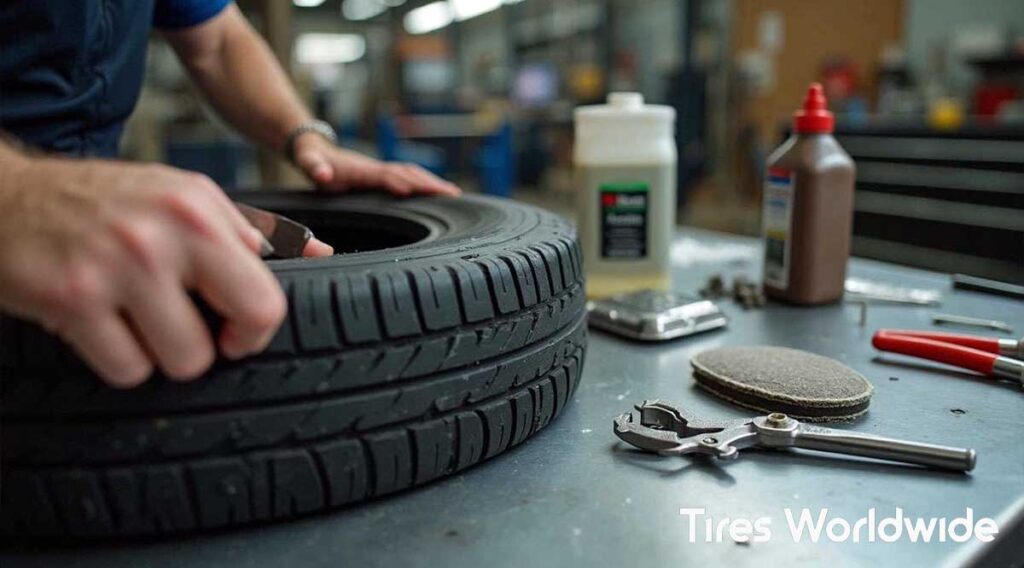
The good news? Fixing uneven tire wear doesn’t have to be stressful or expensive. Most of the time, the solution is simple. Once you figure out what’s causing the problem, you can take action right away and save your tires from wearing out early. Think of this section as your “fix-it toolkit.” Follow these steps and you’ll get your tires back in good shape fast.
Get a Professional Wheel Alignment
If your tires are wearing unevenly, an alignment is often the first thing you should check. A wheel alignment makes sure your tires are pointed straight and making full, even contact with the road. And trust me, even a tiny misalignment can eat through a tire faster than you think.
Here’s what an alignment usually includes:
- Adjusting toe, camber, and caster
- Making sure the steering wheel stays centered
- Checking suspension parts for wear
- Ensuring your tires touch the ground evenly
You might need an alignment if your car:
- Pulls to one side
- Has a crooked steering wheel
- Shows inside or outside edge wear
- Hits a pothole or curb (we’ve all done it)
Most shops recommend checking alignment once a year, or every 6,000–10,000 miles.
Rotate Your Tires Regularly
Tire rotation is one of the easiest (and cheapest) ways to extend your tire life. When you rotate your tires, you’re basically giving each tire a “new job” on the car. Since the front tires usually wear faster, rotating them prevents one pair from dying early.
Here’s what to know:
- Most cars should get a rotation every 5,000–7,500 miles
- Front-wheel drive, rear-wheel drive, and AWD cars all have different rotation patterns
- Rotating your tires helps keep wear even and traction strong
Rotating your tires regularly can easily add thousands of extra miles to their life.
Adjust Tire Pressure the Right Way
Tire pressure might seem like a small thing, but it has a huge impact on how evenly your tires wear. Too much pressure? The center wears out. Too little? The edges wear faster. Pressure mistakes are honestly the most common reason people end up with uneven wear.
Here’s how to do it right:
- Use the pressure number on the driver’s door sticker, not the tire
- Check your pressure when the tires are cold
- Use a digital gauge for the best accuracy
- Check tire pressure at least once a month
Keeping the right tire pressure is a small habit that saves you money without much effort.
Replace Worn Suspension Parts
Even the best tires can’t help you if your suspension is worn out. Old shocks, bad struts, and loose tie rods can all make your tires bounce or shift in ways that cause uneven wear. If you’ve already fixed pressure and alignment but the problem keeps showing up, it’s time to check the suspension.
Signs your suspension needs attention:
- Your car feels bouncy or floats over bumps
- You hear knocking or clunking sounds
- Your tires show cupping or scalloping
- The front dips down hard when braking
- Your steering feels loose or shaky
Suspension repairs vary in cost. Sometimes it’s a simple bushing. Sometimes it’s a pair of shocks or struts. But fixing the issue early prevents expensive tire damage later.
How to Prevent Uneven Tire Wear in the Future
Once you fix uneven tire wear, the next step is keeping it from coming back. The good news? Preventing uneven wear is easier than most people think. A few simple habits can add thousands of extra miles to your tires and save you a lot of money. Plus, your car will feel smoother, safer, and way more reliable.
Let’s walk through the steps that actually make a difference.
Create a Simple Maintenance Routine
You don’t need to be a car expert to take good care of your tires. You just need a basic routine you stick to. Think of it like brushing your teeth — tiny habits that prevent big problems later.
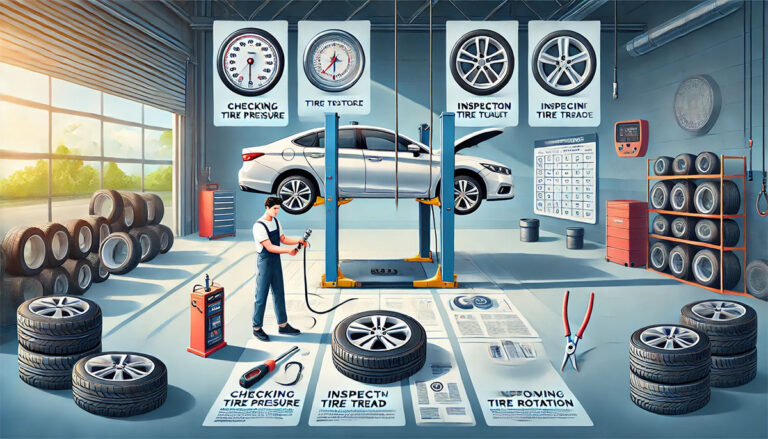
Here’s an easy tire care routine that works:
- Check tire pressure once a month. It takes under two minutes and can prevent edge wear.
- Rotate your tires every 5,000–7,500 miles. This keeps wear even across all four tires.
- Get a wheel alignment once a year. Or sooner if you hit potholes or notice pulling.
- Inspect your tires for odd patterns. Look for edges, dips, feathering, or cracks.
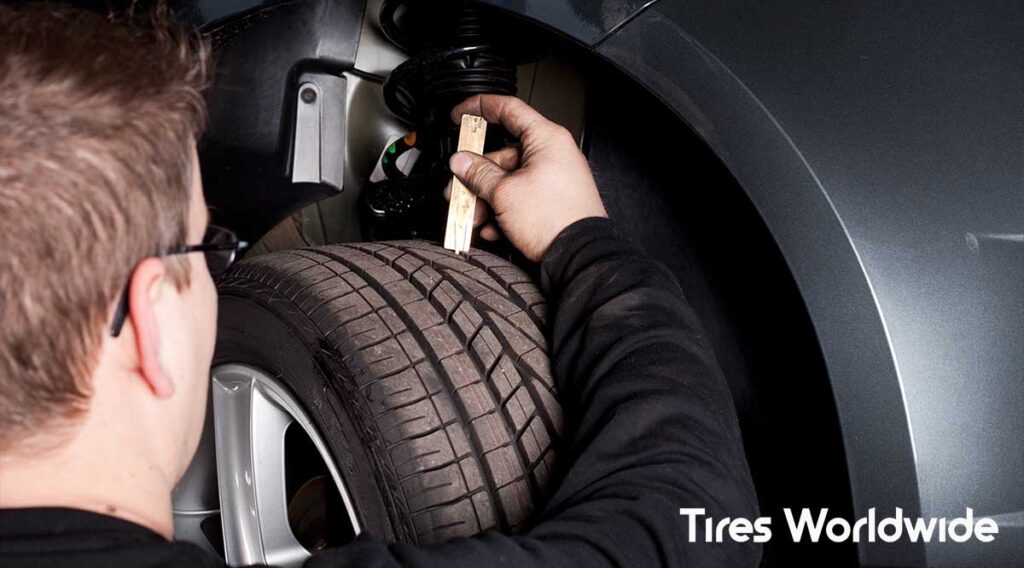
- Check the tread depth. Use the penny test or a tread gauge.
Doing these small things regularly helps catch problems early, long before they ruin your tires.
Drive in a Tire-Friendly Way
Your driving style plays a huge part in how your tires wear. Even small changes can improve tire life and make your ride smoother.
Here are easy driving habits that help prevent uneven wear:
- Avoid hard turns when you don’t need them.
- Take it easy on sudden braking. Smooth braking spreads out the pressure.
- Skip fast starts from stoplights. Quick acceleration hits the front tires hard.
- Slow down over potholes and bumps. They can knock your wheels out of alignment.
- Don’t overload your car. Too much weight stresses the tires.
Driving a little smoother helps your tires last longer — and it actually makes your rides more relaxing.
Choose Quality Tires
The truth is, all tires are not made equal. Cheap tires can save money upfront, but they usually wear faster and unevenly. Higher-quality tires hold their shape better, resist wear, and give you more miles for your money.
Here’s what you should look for when shopping:
- Treadwear rating. A higher number usually means the tire lasts longer.
- Brand reputation. Stick with trustworthy brands like Michelin, Goodyear, Bridgestone, and Continental.
- Correct tire size. The wrong size can cause alignment issues and wear.
- Good reviews from real drivers.
Investing in good tires isn’t just about comfort — it’s about safety and long-term value.
Conclusion
Uneven tire wear might look like a small problem at first, but it can quickly lead to bigger safety issues and expensive repairs. The good news? Once you understand the uneven tire wear causes, fixing them becomes much easier. Just stay on top of your pressure, alignment, and rotations, and your car will reward you with smoother rides and longer-lasting tires.
Take a few minutes today to check your tires—you might just save yourself a lot of money (and stress) down the road!