TPMS System Explained
Did you know that under-inflated tires cause more than 11,000 accidents every year in the U.S.? Wild, right? That’s exactly why the TPMS system exists! If you’ve ever seen that little horseshoe-shaped warning light pop up on your dashboard and thought, “Uh… now what?” — you’re in the right place.
In this guide, I’m breaking down the whole thing in simple, everyday language. No confusing mechanic jargon. No guessing. Just a friendly walk-through of what TPMS is, how it works, and why it’s a big deal for tire safety. Let’s dive in!
What Is a TPMS System?
Definition and Purpose
Let’s keep this super simple.
TPMS stands for Tire Pressure Monitoring System. It’s a safety feature in your car that keeps an eye on your tire pressure and warns you when one or more tires are too low. Instead of guessing if your tires need air, the TPMS system does the watching for you.
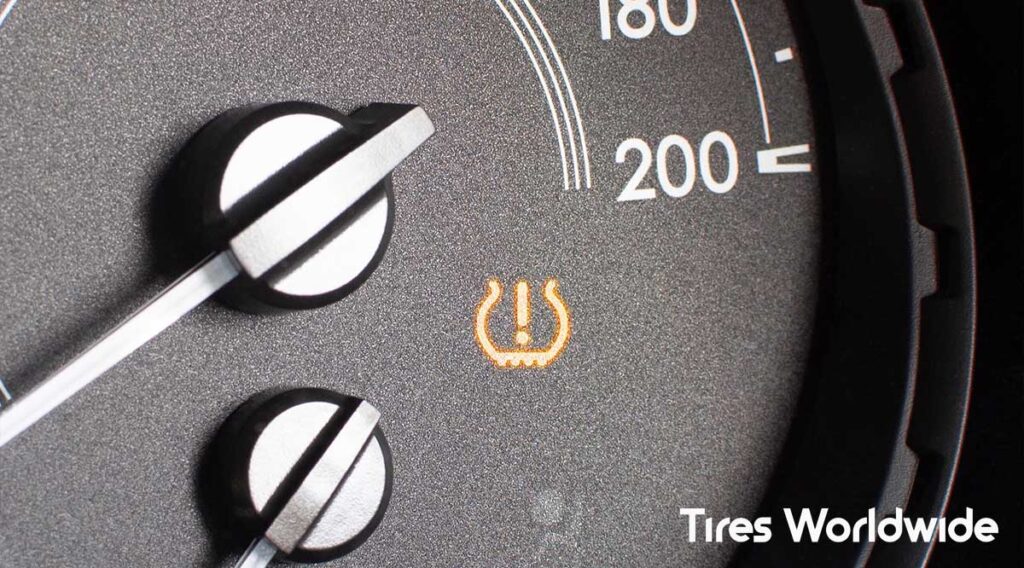
Think of it like a little digital helper. While you’re driving, the system checks your tire pressure in the background. If the pressure drops below a safe level, a warning light shows up on your dashboard. Most of the time, it looks like a yellow horseshoe with an exclamation mark in the middle. When that light pops on, your car is basically saying, “Hey, your tires need attention!”
Why does this matter so much?
Low tire pressure can cause all kinds of problems. Your car might use more gas. Your tires can wear out faster. And in the worst case, a very low tire can overheat and blow out. That’s dangerous at any speed, but especially on the highway.
The main purpose of a TPMS system is to:
- Help prevent accidents caused by under-inflated tires
- Protect your tires from damage
- Save you money on fuel and tire wear
- Give you peace of mind while you drive
You still should check your tire pressure sometimes with a regular gauge, but TPMS makes it way easier to know when something’s wrong.
History of TPMS
TPMS hasn’t always been around. Cars didn’t come with this system “back in the day.” Most drivers had to rely on guesswork. If the tire looked low or the car felt weird, then you’d check it. Not exactly the safest method.
That started to change as more data came out about crashes linked to bad tires and low pressure. One of the biggest wake-up calls happened in the late 1990s and early 2000s, when major tire failures led to thousands of accidents and recalls. Governments and safety groups realized something had to change.
In the United States, TPMS became a much bigger deal after a law called the TREAD Act was passed. This law helped push for better tire safety and required new vehicles to include a tire pressure monitoring system. Since the mid-2000s, most new cars sold in the U.S. have come with TPMS as standard equipment.
Over time, TPMS technology has improved a lot.
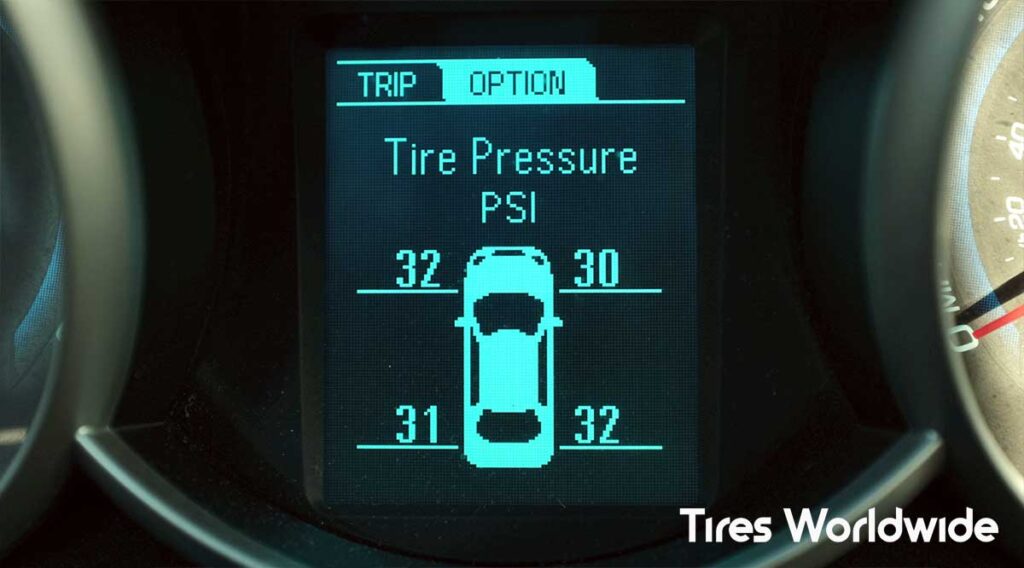
Older systems were more basic and sometimes less accurate. Newer systems can show the pressure for each tire on the dashboard screen. Some even give you live readings and show which specific tire is low.
Today, TPMS is a normal part of modern car safety, just like airbags and seat belts. It started as a response to real problems on the road and has grown into a key feature that helps drivers stay safe without needing to be car experts.
Types of TPMS Systems
When people talk about TPMS, they’re usually referring to one of two kinds: direct or indirect. Both do the same job—telling you when your tire pressure is low—but they work in very different ways. And knowing the difference can actually help you understand your car better, especially when that warning light won’t go away!
Let’s break each one down in a way that actually makes sense.
Direct TPMS
Direct TPMS is the more “high-tech” version. Every tire has a small sensor inside it, usually attached to the valve stem. This sensor measures the exact air pressure in the tire. Not a guess. Not an estimate. A real number.
Here’s what makes direct TPMS so solid:
- It gives you accurate PSI readings for each tire
- It can warn you faster when pressure drops
- Some cars even show pressure changes in real-time on the dashboard
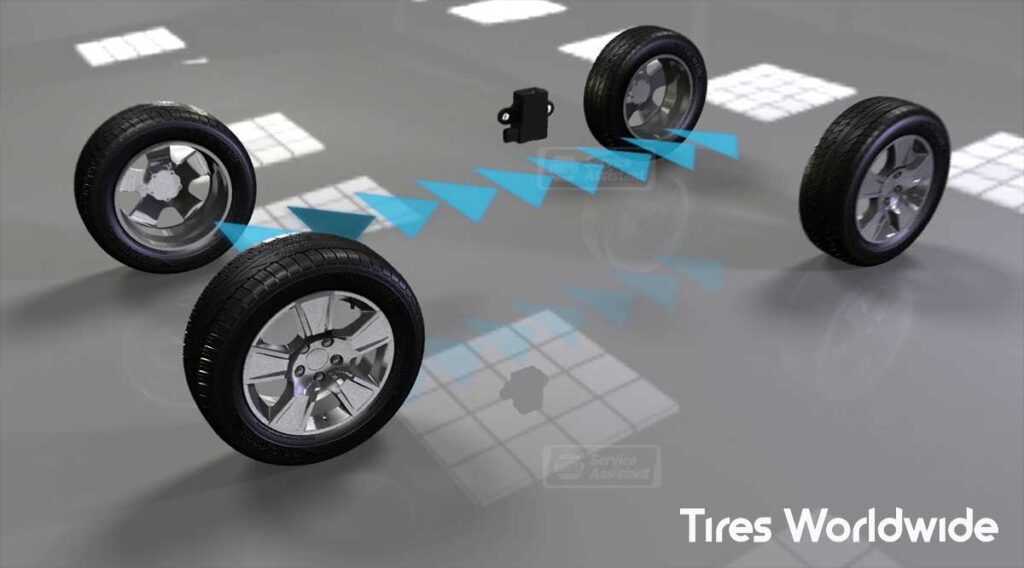
These sensors send data straight to your car’s computer using a tiny built-in radio transmitter. Pretty wild for something you never even see.
But like everything, it has some downsides:
- The sensors run on small batteries that eventually die
- Replacing a sensor can cost a little money
- Installing new tires sometimes requires “relearning” the sensors
Still, most people prefer direct TPMS because it’s simply more reliable and spot-on.
Indirect TPMS
Indirect TPMS works differently. It doesn’t measure air pressure at all. Yep—you read that right! Instead, it uses the ABS wheel-speed sensors your car already has.
Here’s the simple version:
A tire with low pressure spins a little faster than a properly inflated tire. The car’s computer notices that weird difference and says, “Hmm… something’s off.” Then it triggers the TPMS light.
Why some cars use indirect TPMS:
- It’s cheaper for manufacturers
- There are no batteries to worry about
- There are no sensors inside the tires
But there are some trade-offs:
- It’s not as accurate as direct TPMS
- It can’t tell you which tire is low
- You have to reset it yourself after putting air in the tires
- Sudden temperature drops may confuse it
Indirect TPMS is more common in older or budget-friendly cars. It still works, but it’s basically an educated guess instead of a real pressure reading.
How a TPMS System Works
A TPMS system might seem like magic when that little warning light pops on, but there’s a real, simple process happening behind the scenes. Your car is constantly checking your tire pressure even when you’re not thinking about it. And honestly, that’s pretty awesome. Let’s break it down so it feels crystal clear.
In-Tire Sensors and Data Transmission
If your car has direct TPMS, each tire has a tiny sensor sitting inside it. Most of the time it’s attached to the valve stem, just chilling in there like a little pressure detective. These sensors check the air pressure inside the tire every few seconds.
When the pressure is good, the system stays quiet.
But if the pressure drops too low? Boom—the sensor sends a radio signal straight to your car’s computer.
Here’s what these sensors are actually measuring:
- The air pressure (PSI) inside the tire
- Sometimes the temperature of the air
- The battery level inside the sensor
- The sensor’s unique ID so the car knows which tire it’s reading
All of that info gets sent wirelessly to the vehicle’s ECU, which is the car’s main computer. The system then compares your current tire pressure to the recommended PSI level. If the pressure falls below the safe range, the TPMS light turns on.
This entire process happens automatically. You don’t have to press anything. No apps. No buttons. No checking anything manually (unless you want to). It’s the car doing its own health check.
Dashboard Alerts and What They Mean
Now let’s talk about that famous TPMS warning light on your dashboard. It shows up in a few different ways, and each one tells you something different. Knowing the difference can save you from guessing or stressing.
1. Solid TPMS Light
This means your tire pressure is low in one or more tires.
Not an emergency, but definitely something to handle soon.
Stop somewhere safe and check your tires or fill them up.
2. Flashing TPMS Light
If it blinks for 30–60 seconds and then stays solid, that usually means there’s a problem with the TPMS system itself.
This could be:
- A dead sensor battery
- A faulty sensor
- A system communication error
- A problem after a tire change
This is when you may need a mechanic or tire shop to check it out.
3. Cold Weather Light
On chilly mornings, you might see the TPMS light turn on and then turn off after driving for a bit.
Why? Because cold air makes tire pressure drop temporarily.
Nothing’s wrong with the system—you just need a little air.
Each alert is meant to help you take action before a small issue turns into a big headache. Tire pressure affects everything from fuel efficiency to steering control. That’s why these alerts matter!
Common TPMS Problems and Fixes
Even though a TPMS system is super helpful, it’s not perfect. Sometimes it throws warnings even when your tires look fine. Other times it stops working altogether. Don’t worry—most TPMS problems are simple and easy to understand once you know what’s going on. Let’s break it all down in a way that makes sense and keeps the stress low.
Faulty Sensors
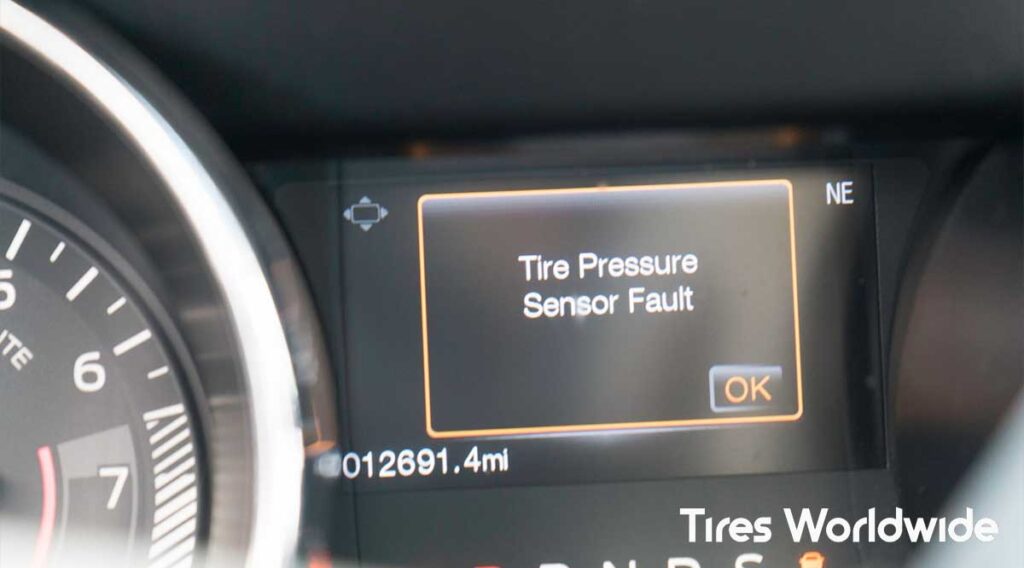
TPMS sensors don’t last forever. Each one has a tiny built-in battery, and once that battery dies, the sensor can’t send signals anymore. When that happens, your TPMS light might flash when you start your car, then stay solid. That’s the system saying, “Hey… I can’t read one of the sensors.”
Common signs of a bad sensor:
- The TPMS light keeps flashing
- Readings don’t update or show the wrong PSI
- One tire shows “0 PSI” or “—” on the screen
- The warning light stays on even when your tires are full
Most TPMS sensors last 5–10 years depending on driving conditions. When one fails, shops usually replace it during a tire service.
Replacing a single sensor usually costs less than people expect, and once it’s fixed, the warning light goes away instantly.
Seasonal Temperature Changes
If you’ve ever walked outside on a freezing morning and suddenly saw the TPMS light turn on, you’re not alone. Cold weather can make your tire pressure drop fast, sometimes by a few PSI overnight. It doesn’t mean your tires are leaking. It just means the air inside them shrank because of the lower temperature.
Here’s what usually happens:
- The light turns on when you start the car
- After driving for a few minutes, warm air expands
- The pressure rises and the light may turn off
Totally normal. It’s one of the biggest reasons TPMS lights come on in winter.
A quick tip:
Your tire pressure drops about 1 PSI for every 10°F the temperature falls. So if winter hits hard, you might need to add a little air.
After Tire Changes or Rotations
Here’s something shops don’t always explain well: whenever you get new tires, rotations, or even a tire repair, your TPMS system may need a “relearn.” This lets the car know which sensor is in which wheel. If the shop forgets to do this, the system might freak out.
This can cause:
- Wrong tire showing as “low” on your dashboard
- No readings at all
- Flashing TPMS lights
- Random warnings even when tires look fine
A relearn can take less than five minutes with the right tool. Some cars relearn automatically after a short drive, while others need a scan tool. This isn’t a big repair—it’s just a quick update that helps the system understand where each sensor is sitting.
How to Reset a TPMS System
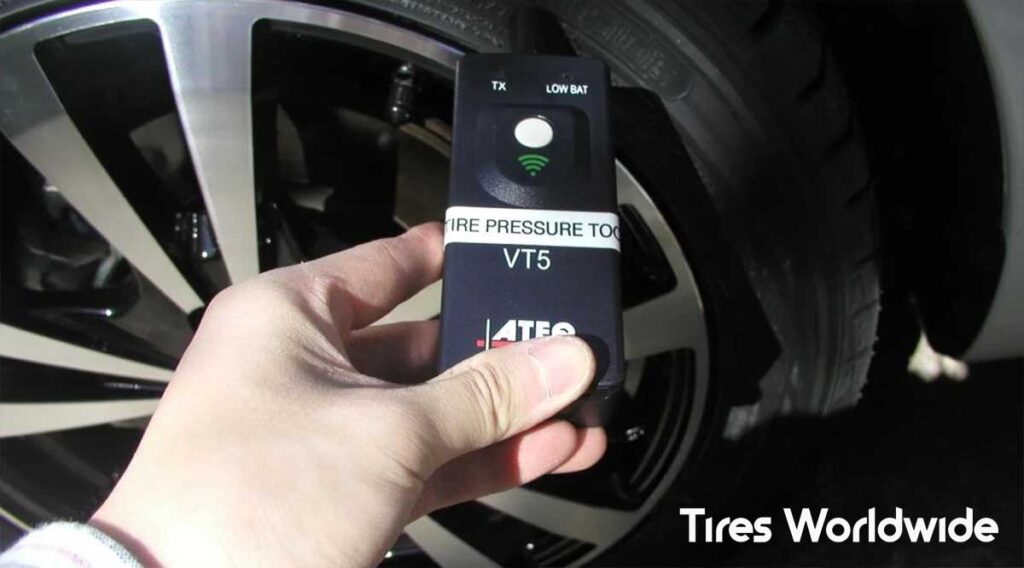
Resetting a TPMS system sounds scary at first, but most of the time it’s honestly pretty simple. You don’t need to be a mechanic. You don’t need fancy tools (unless your car really insists on it). The TPMS reset process just helps your car “wake up” and understand the new tire pressures or sensor positions. Let’s walk through it in a way that feels easy and stress-free.
Manual Reset Methods
Some cars come with a built-in TPMS reset button. Yep—an actual physical button usually hidden somewhere near the steering wheel, under the dash, or inside the glove box. It’s kind of like a “refresh” button for your tire pressure system.
Here’s the general process most cars follow:
- Fill all tires (including the spare if your car uses a sensor) to the recommended PSI.
- Turn the ignition to the “ON” position, but don’t start the engine yet.
- Press and hold the TPMS reset button until the light flashes.
- Release the button, start the car, and drive for a few minutes.
That’s it! Your car learns the new pressure levels and resets the warning light.
A couple of quick tips:
- Make sure the tires are filled before you hit the button.
- Some cars need a short highway drive for the reset to finish properly.
- If the light comes back right away, you might have a deeper issue like a dead sensor.
Not every car has a reset button, but if yours does, your owner’s manual will show you exactly where it hides.
Relearn Procedures
Here’s where things get a little more technical—but don’t worry, we’ll keep it easy.
A relearn is different from a basic reset. A relearn teaches your car the exact sensor positions. For example, if the sensor in your front left tire gets moved to the back right during a rotation, your car needs to know that so it shows the right readings.
There are three ways cars usually relearn TPMS sensors:
1. Automatic Relearn
Some modern cars relearn on their own. After you fill the tires or rotate them, the system figures it out as you drive. No buttons, no tools, no stress. These cars usually only need you to drive around 5–15 minutes at 20–40 mph.
2. Stationary Relearn
Some cars need the vehicle parked while you activate a relearn mode. Then you use a small TPMS tool to trigger each sensor manually. Tire shops do this all the time—it’s fast and simple.
3. OBD Relearn
Certain vehicles (especially older ones or luxury brands) require a scan tool plugged into the car’s OBD port. The tool “talks” to the sensors and tells the vehicle where each one is. Shops use this method the most because it’s super accurate.
If your TPMS light stays on even after filling your tires, your car might simply need a relearn. No big deal—just a quick process that helps the system read everything correctly again.
TPMS vs Regular Tire Gauges
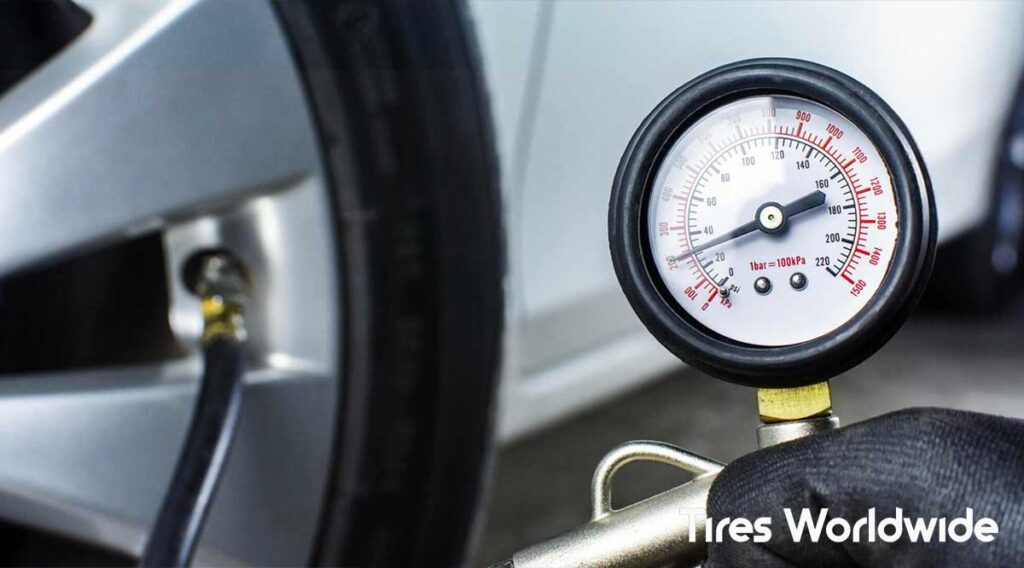
Let’s be real for a second. Even though TPMS is super helpful, it’s not the superhero of tire pressure. It’s more like the friendly neighbor who warns you when something looks off. A regular tire gauge, on the other hand, is the reliable old-school tool that gives you the straight truth every single time. Both matter, and both have benefits. So let’s break it down in a way that actually makes sense.
Accuracy Differences
TPMS is great for alerts, but it’s not perfect.
Direct TPMS gives you real PSI readings, but even those can be off by a little bit. Indirect TPMS isn’t measuring actual pressure at all—it’s just noticing changes in wheel speed. That means the system can sometimes miss slow leaks or changes that aren’t dramatic enough to trigger a warning.
A regular tire gauge?
It tells you the exact PSI right on the spot. No signals. No computers. No guessing. That’s why mechanics still use handheld gauges for final checks.
Here’s a simple way to look at it:
- Direct TPMS = Very good, usually close to accurate
- Indirect TPMS = Basic estimate
- Manual tire gauge = Most accurate every time
A good habit is to check your tires with a gauge once a month. It takes less than two minutes and gives you peace of mind.
Best Practices for Tire Checks
Even with TPMS watching your back, making tire checks part of your routine helps keep your car safe and your wallet happy. Tires lose air slowly over time, no matter what. Weather changes. Roads change. And sometimes you hit things without noticing.
Here are the best habits to follow:
1. Check tire pressure at least once a month.
Your TPMS won’t alert you unless pressure is low enough to be a problem. A quick manual check helps catch issues early.
2. Always check tires when they’re “cold.”
That means checking them before driving or after the car has been parked for a few hours. Warm tires give higher readings.
3. Follow the PSI on the sticker inside your driver’s door—not the number on the tire.
The door sticker shows the correct pressure for your specific vehicle.
4. Use a digital tire gauge for the best accuracy.
They’re cheap, easy, and super reliable.
Your TPMS is amazing for letting you know when something’s wrong. But a regular gauge keeps you ahead of the problem before the warning ever shows up.
Upgrading to an Aftermarket TPMS
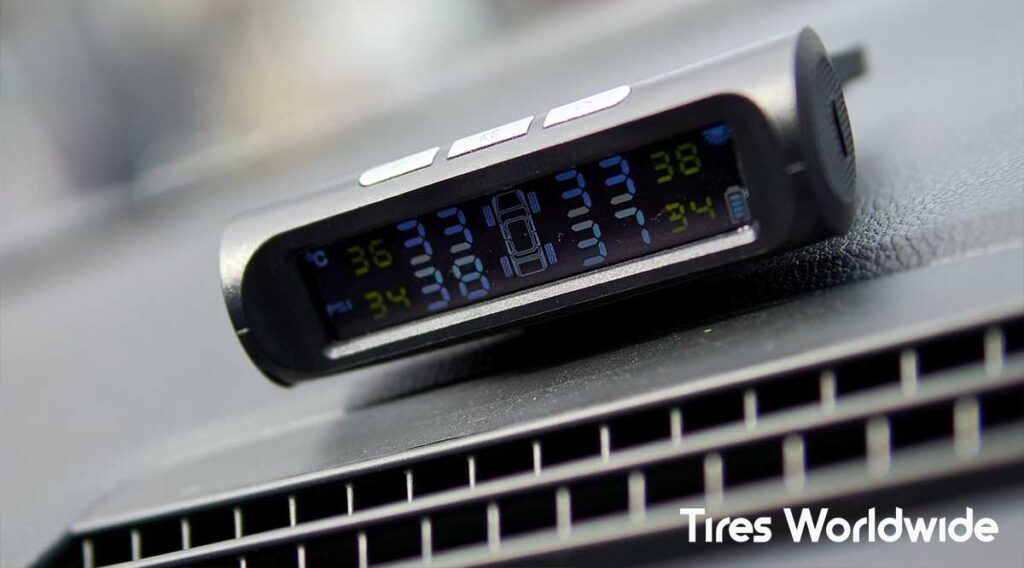
If your car didn’t come with TPMS or the factory system is giving you nonstop headaches, an aftermarket TPMS can be a total game-changer. These systems are affordable, easy to install, and way more advanced than people expect. Plus, you get real-time pressure readings without having to guess or wait for a warning light. Let’s break down your options in a simple, friendly way so you know exactly what to choose.
External TPMS Kits
External TPMS kits are the easiest upgrade you can get. They use small valve-stem caps that replace your regular tire caps. Each cap has a sensor inside that reads the pressure and sends the info to a little screen in your car. A lot of screens are solar-powered, so you don’t even need to plug anything in. Pretty sweet, right?
Here’s why people love external TPMS kits:
- Super easy to install (just screw them on!)
- No need to remove the tires
- Affordable and beginner-friendly
- Solar-powered displays mean fewer wires
These systems are great if you want something quick, simple, and accurate without messing with your car’s factory electronics.
Of course, there are a few small downsides:
- The caps can be stolen if someone really wants them
- They may be less accurate than internal sensors
- Battery life inside the caps varies by brand
But for most drivers, especially daily commuters, external TPMS kits are more than enough.
Internal Aftermarket Systems
Internal aftermarket TPMS kits are the “premium” upgrade. These systems use in-tire sensors just like factory TPMS setups. They’re installed inside the tire when the tire is removed from the wheel. Because they’re positioned inside, they give incredibly accurate pressure readings.
Pros of internal TPMS upgrades:
- Very accurate readings
- The sensors are protected inside the tire
- No risk of theft since they’re hidden
- Long battery life (often 5+ years)
These setups usually come with a small wireless screen or a phone app that shows the tire pressure in real time. If you drive long distances, haul heavy loads, tow trailers, or just want the most accurate readings possible, internal TPMS is the best choice.
The only downside?
You’ll need a shop to install them. But once they’re in, you’re good for years.
Internal kits are perfect for people who want an OEM-style system without buying a whole new car.
Conclusion
Now you’ve got the TPMS system explained in the simplest way possible! These little systems might seem small, but they play a massive role in keeping drivers safe and extending tire life. Whether your warning light just came on or you’re curious about upgrading to something smarter, you’re already ahead of the game by understanding how TPMS works.
Stay safe out there — and keep those tires happy!