Tire Wear Pattern Meaning: A Complete Guide
Ever looked at your tires and thought, “Why does this part look more worn than the rest?” You’re not alone! Understanding tire wear pattern meaning can save you money, prevent breakdowns, and even protect your life. Tires tell a story — and the patterns they wear down in often reveal exactly what’s going on with your vehicle.
From misalignment to low pressure to suspension issues, each wear pattern has its own cause… and its own fix. Let’s break it all down in a fun, simple way so you can feel confident every time you hit the road!
What Tire Wear Patterns Reveal About Your Vehicle
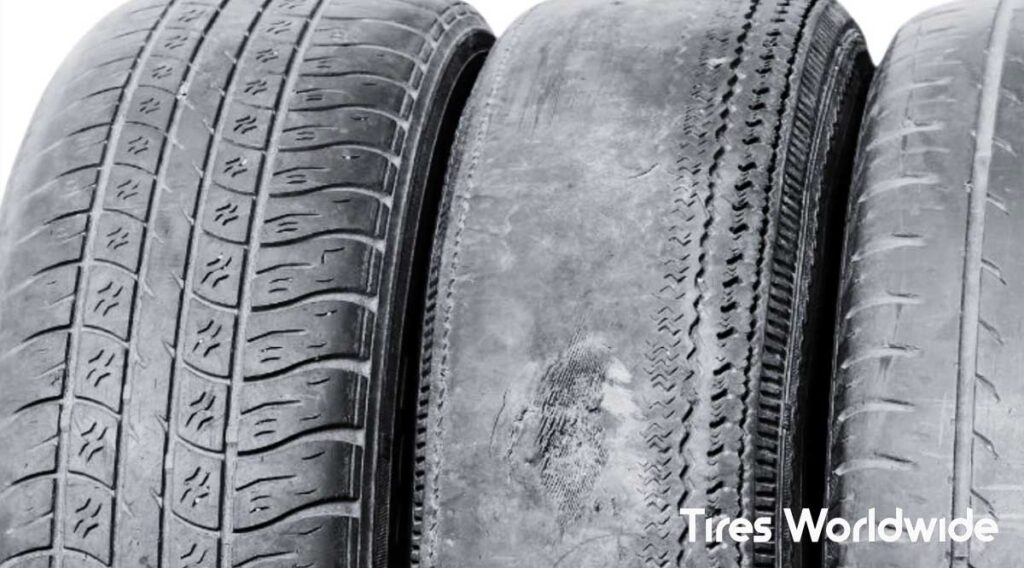
Tires don’t just sit there and spin. They talk to you. Seriously—every little mark, stripe, or worn-down patch is telling you something. And once you know what those patterns mean, it feels like you unlocked a secret language your car has been trying to share with you for years.
Most drivers never look at their tires until something goes wrong. But you? You’re about to understand what every wear pattern means and how it connects to your car’s health. It’s easier than you think, and it could save you a lot of money, stress, and maybe even a tow truck call.
Below, I’ll break it all down in simple, real-world language.
Why You Should Regularly Check Tire Wear
You don’t need to be a mechanic to keep an eye on your tires. Just taking a quick look now and then can help you spot trouble early before things get expensive.
When you understand tire wear patterns, you can:
- Catch problems before they become dangerous
- Avoid blowouts that happen from thin or uneven tread
- Notice issues with alignment, brakes, or suspension
- Keep your car driving straight and smooth
- Save money by fixing problems early instead of replacing whole tires later
Think of it like checking your shoes. If one side of your sneaker is more worn than the other, something’s up with how you walk. Tires work the same way.
The Most Common Types of Tire Wear Patterns
Every tire tells a different story. Some patterns mean your tire pressure is off. Others point to crooked wheels or worn-out suspension parts.
Here are the most common patterns you’ll see:
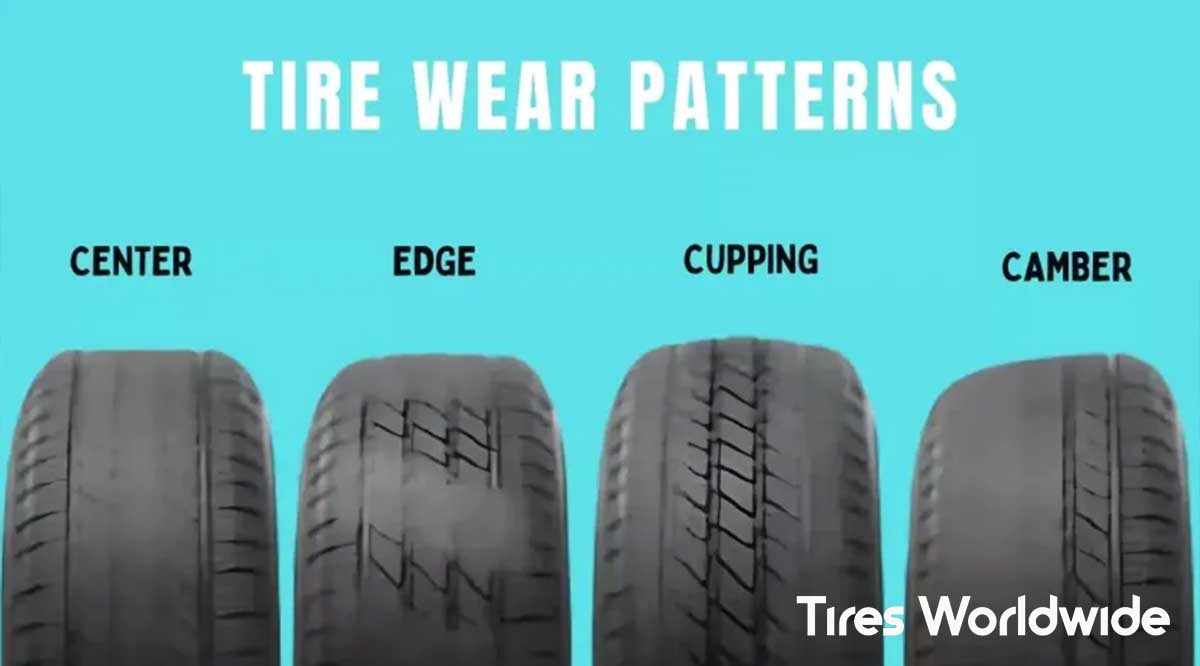
- Center wear – The middle wears out faster.
- Edge wear – The sides look bald while the center looks fine.
- Cupping – Small dips or scallops across the tread.
- Feathering – One side of the tread feels sharp; the other feels smooth.
- Patchy wear – Random spots wear down faster than others.
Each of these patterns has its own meaning, and we’ll dig into what causes them in the next sections. Once you learn to spot them, you’ll know exactly what your car is trying to tell you.
Common Tire Wear Patterns and Their Meanings
Center Tire Wear
When the middle of your tire looks more worn than the sides, the cause is almost always too much air in the tire.
This happens because an overinflated tire bulges in the center, putting more pressure there while you drive. That middle area hits the road harder than anything else.
Here’s what this pattern is trying to tell you:
- Your tires are overinflated
- You may be filling your tires to the max pressure shown on the tire (don’t do that!)
- Overinflation reduces traction and makes your ride feel harder
- It can even cause uneven handling, especially on wet roads
Fixing this is simple. All you need to do is lower the PSI to what your car recommends — not the number printed on the tire.
Edge Wear
When the edges of your tire are worn down but the center looks normal, this usually means one thing: low tire pressure.
Underinflated tires sag. They flatten out more on the road. That puts extra pressure on both edges and not enough pressure in the middle.
This pattern is a big red flag because:
- Low tire pressure causes tires to heat up faster
- Heat weakens the rubber
- Weak rubber leads to blowouts — especially on highways
- Your gas mileage gets worse
- Your steering can feel sluggish
- Your braking distance gets longer
If both edges are worn, your tires are begging you for more air.
If only one edge is worn, that’s a different problem — usually alignment.
Cupping or Scalloping
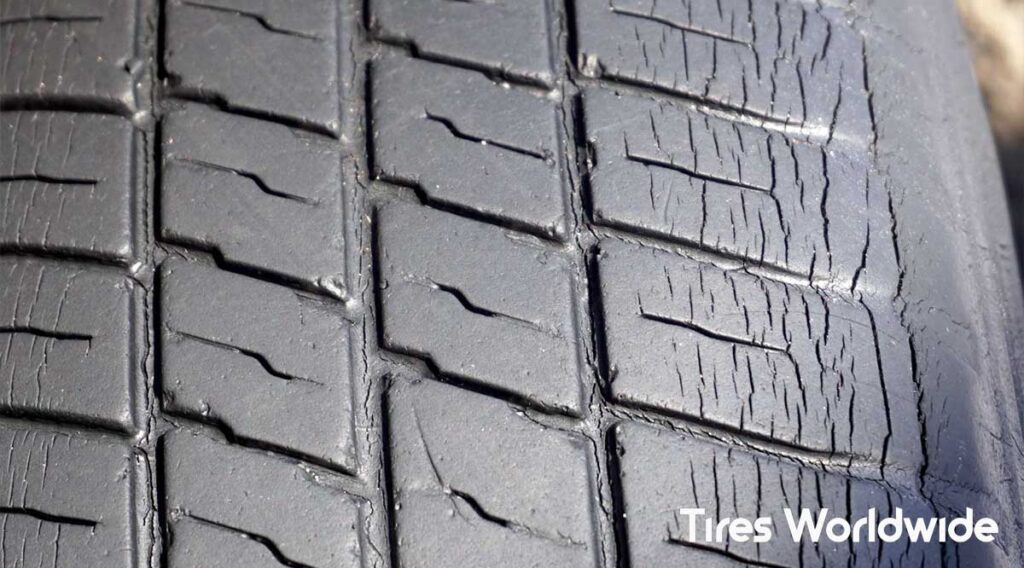
If your tire looks like it has little dips, waves, or scooped-out spots, that’s called cupping (or scalloping). This one usually surprises people because it looks so weird.
Cupping happens when the tire bounces instead of rolling smoothly. And the reason it bounces is almost always a suspension problem.
Common causes include:
- Worn-out shock absorbers
- Bad struts
- Loose suspension parts
- Tires out of balance
This pattern means your tire is literally slapping the road as it spins. Not good at all.
If you hear thumping noises at low speeds or feel your car vibrating, check your suspension right away.
Feathered Tire Wear
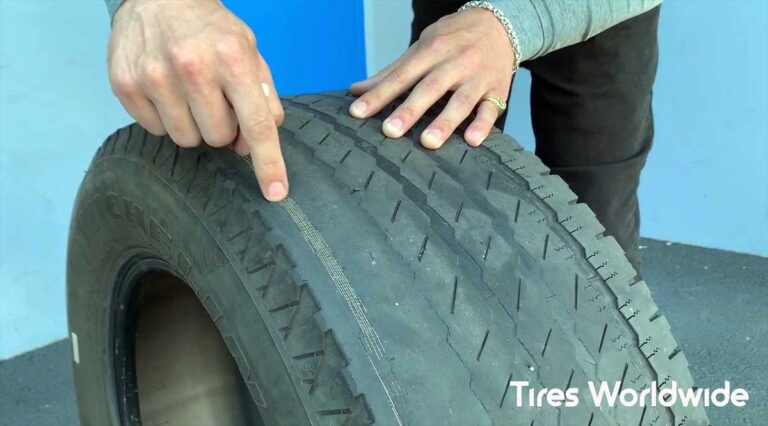
Feathering feels like one side of each tread block is smooth while the other side feels sharp. If you run your hand across the tire and feel this uneven texture, that’s feathering.
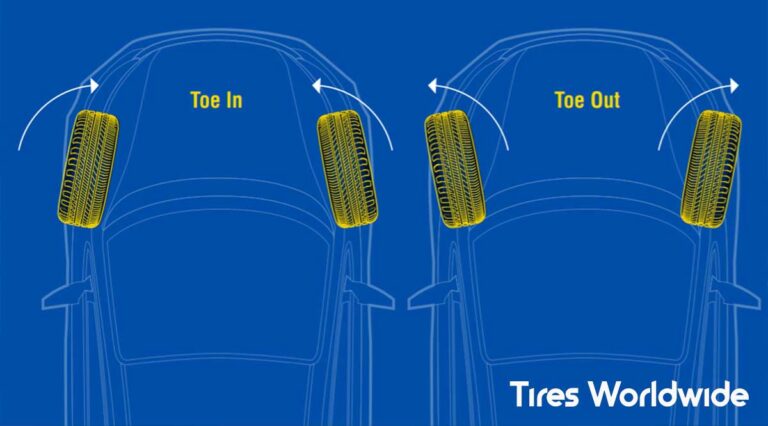
This is almost always caused by alignment problems, especially the “toe” setting — the angle your tires point in or out.
Feathering can show up when:
- Your wheels are slightly pointed inward
- Your wheels are slightly pointed outward
- You hit a curb hard
- You drive with worn suspension parts
This pattern usually means your car isn’t rolling straight the way it should. You might even feel the steering wheel pull a little.
Getting an alignment fixes this pretty quickly, and it can save your tires from wearing out way too soon.
One-Sided Tire Wear
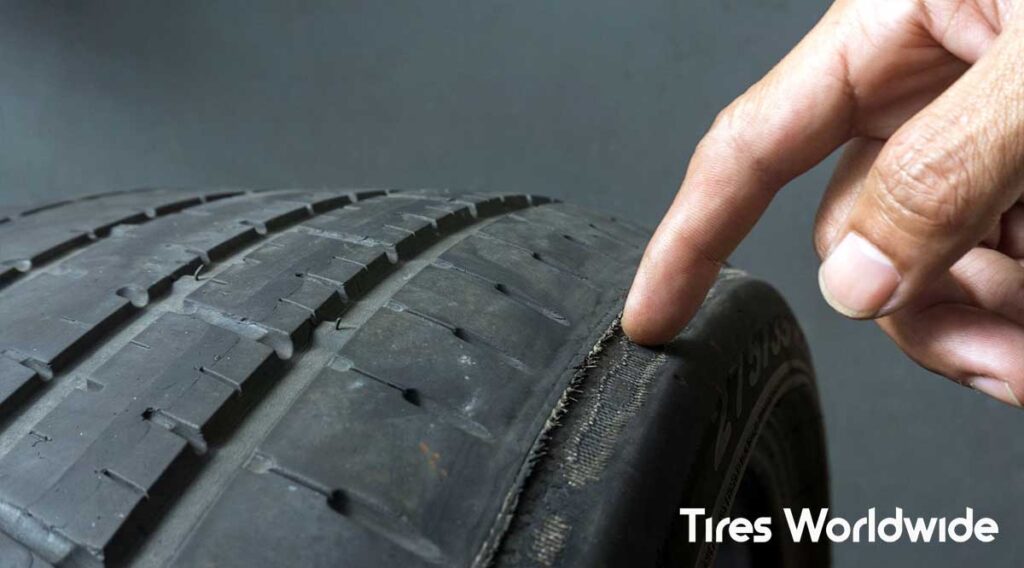
When one side of the tread is completely worn — either the inner edge or the outer edge — that’s one of the clearest signs of severe misalignment.
This happens when:
- Your wheels lean inward too much (negative camber)
- Your wheels lean outward too much (positive camber)
- You hit a pothole hard
- Suspension parts are bent or worn
Driving on this type of wear is risky because the bald side can blow out faster than you’d expect. If you see this pattern, get your alignment checked immediately.
How to Diagnose Tire Wear Patterns at Home
You don’t need to be a car expert to figure out what’s going on with your tires. Seriously — most of the signs are right in front of you. Once you know what to look for, checking your tires only takes a couple of minutes, and it can save you from costly repairs later.
Think of this like doing a quick health check on your car. A little look here, a little touch there, and boom — you can spot problems way before they turn into something major.
Let’s walk through how to diagnose tire wear at home without fancy tools or mechanic-level knowledge.
Visual Inspection Techniques
First things first: just look at your tires. That alone can reveal a lot.
Here’s what to do:
- Park where there’s good sunlight or use a flashlight
- Look at the tread from the top and from the side
- Compare all four tires — they should wear evenly
- Check if the tread looks smooth, wavy, sharp, or bald in spots
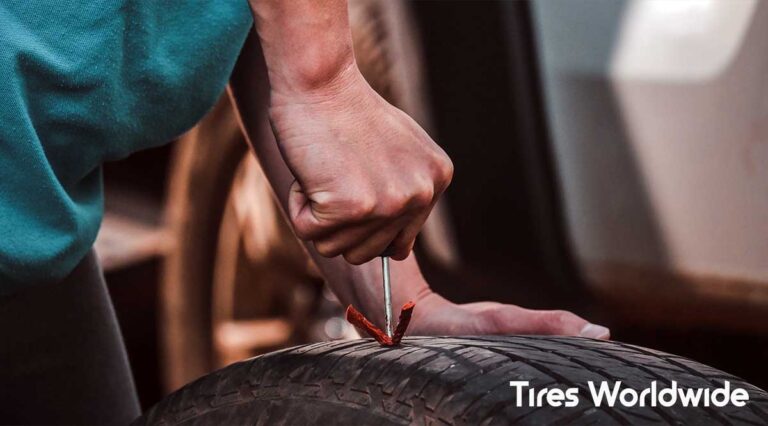
- Look for cracks, bulges, bubbles, or nails
Small changes in the tread can tell you a big story about what’s going on under your car. If one tire looks different from the others, that’s usually a sign something isn’t wearing evenly.
Checking Tread Depth With a Coin
You don’t need a special tool to measure tread depth. A coin can tell you exactly how safe your tires are.
Here’s the easy method:
- Use a penny
- Put it upside down into the tread
- If you can see the top of Lincoln’s head, the tread is too low
That means the tire is worn out and unsafe to drive on. This simple test takes 5 seconds, and it works every time.
Tools to Measure Treadwear More Accurately
If you want a more exact reading, there are small, cheap tools you can grab online or at any auto store.
Useful tools include:
- Tread depth gauges — most cost $5–$10
- Digital tread readers — more accurate, still affordable
- Built-in tread wear indicators — raised bars inside the tire grooves
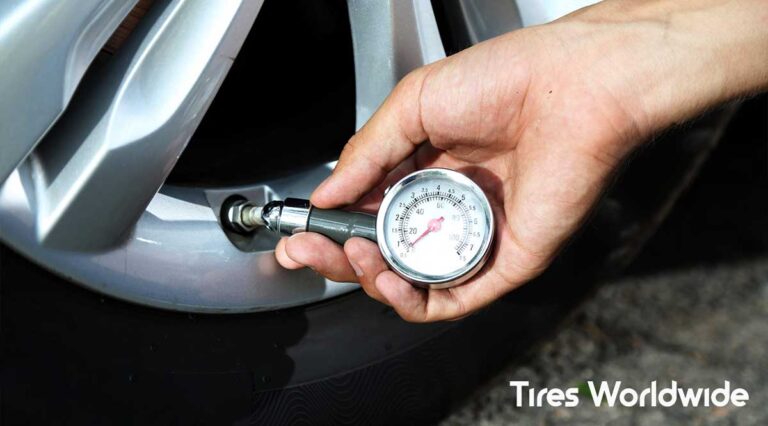
- Tire pressure gauges — good tire pressure prevents uneven wear
These tools are simple to use and help you spot problems before they become expensive repairs.
When to Get a Professional Diagnosis
Sometimes the wear pattern is easy to understand. Other times, the cause isn’t obvious at all. When that happens, it’s better to let a professional take a look.
Here’s when to call in a mechanic:
- Your tires are vibrating at high speeds
- Your car pulls to one side
- You hear thumping or knocking noises
- The wear pattern looks strange or uneven
- You just replaced suspension parts
- You hit a large pothole, curb, or road hazard recently
A shop can check your suspension, alignment, and wheel balance — things you can’t see from the outside. This helps you avoid wasting money replacing tires without fixing the real issue.
Fixing Tire Wear Problems Before They Get Expensive
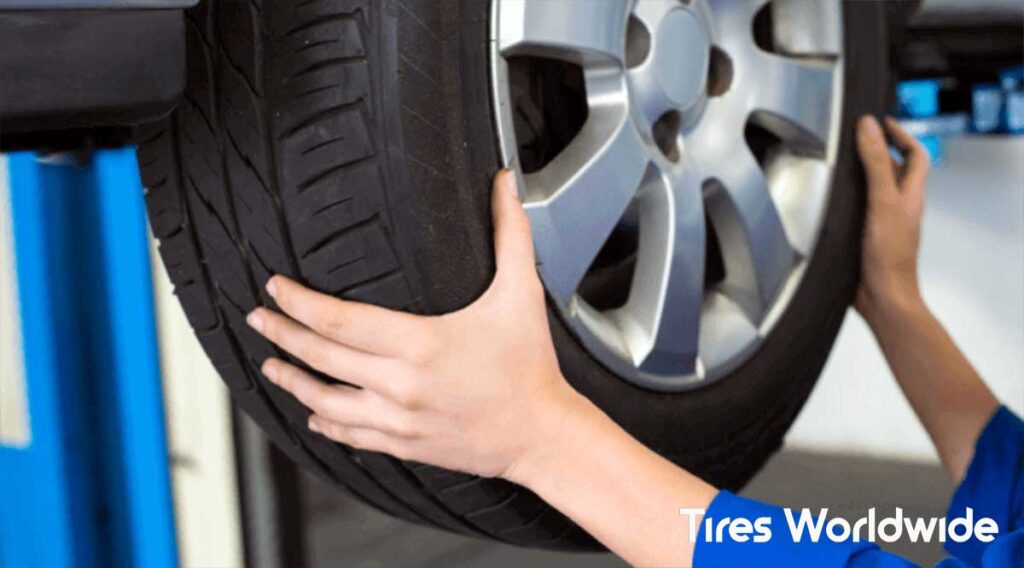
The good news? Most tire wear problems are totally fixable — and a lot cheaper to repair early than later. Uneven wear might look scary, but the cause is usually something simple like low air, misalignment, or a tired suspension part.
Think of this section as your “damage control” guide. If you catch the problem now, you can save your tires, save your money, and keep your car riding smooth.
Let’s break down the easiest ways to fix tire wear before it turns into a major repair bill.
Correcting Inflation Issues
Tire pressure is one of the biggest reasons tires wear out the wrong way. The best part? It’s also the easiest thing to fix.
Here’s what you should do:
- Check your tire pressure at least once a month
- Use a digital pressure gauge for the most accurate reading
- Make sure your tires match the PSI on the sticker inside your driver-side door
- Add air or release air until the PSI matches the recommended number
Heat, cold weather, and long trips all change your tire pressure. This is why checking once a month is super important. Low or high pressure can destroy a tire faster than you’d expect.
How Often to Check PSI and Why It Matters
If you’re wondering how often to check tire pressure, the answer is simple: monthly. Tires lose a little air naturally all the time. Even new ones.
Here’s why this matters:
- Low PSI causes edge wear
- High PSI causes center wear
- Wrong PSI burns more fuel
- It also makes your car harder to steer
- And it increases your stopping distance
A quick monthly check keeps you safe and keeps your tires alive longer.
Alignments and Rotations
If your tires look uneven, your wheels might be out of alignment. This is super common — hitting potholes, curbs, or speed bumps too fast can knock things out of place.
Here’s what alignment fixes:
- Steering feels smoother
- Your car stops pulling to the left or right
- Tires wear evenly
- Your ride feels more stable
- Fuel efficiency improves
You should get an alignment every 6,000–10,000 miles or whenever you notice a weird wear pattern.
Tire rotation is important, too. It means moving the tires around the car so they wear evenly. Most mechanics suggest rotating tires every 5,000–7,500 miles.
Signs You Need an Alignment ASAP
If you notice any of these, schedule an alignment right away:
- Your steering wheel isn’t centered while driving straight
- Your car pulls to one side
- You hit a big pothole recently
- The tread looks uneven
- You feel shaking at certain speeds
- Your tires squeal when turning
Ignoring alignment problems is like ignoring a toothache — it only gets worse.
Replacing Worn Suspension Components
If your tires show cupping or scalloping, your suspension is probably worn out. That means the tire is bouncing on the road instead of rolling smoothly.
Common suspension parts that cause tire wear:
- Shocks
- Struts
- Ball joints
- Control arms
- Tie rods
When these parts wear out, your tires take the hit. Replacing bad suspension parts not only stops weird wear patterns — it also makes your car safer and more comfortable.
How to know if your suspension is bad:
- Your ride feels bouncy
- The car nose-dives when braking
- You hear clunks or knocks
- Your tires shake or vibrate
- The car leans in turns more than usual
How Bad Suspension Affects Fuel Economy
A worn suspension doesn’t only damage tires — it also forces your car to work harder. When the car doesn’t stay stable on the road, the engine burns more fuel to keep everything moving straight.
So fixing your suspension is not just about comfort. It’s also about saving gas money and protecting your tires.
How to Prevent Tire Wear Patterns in the Future
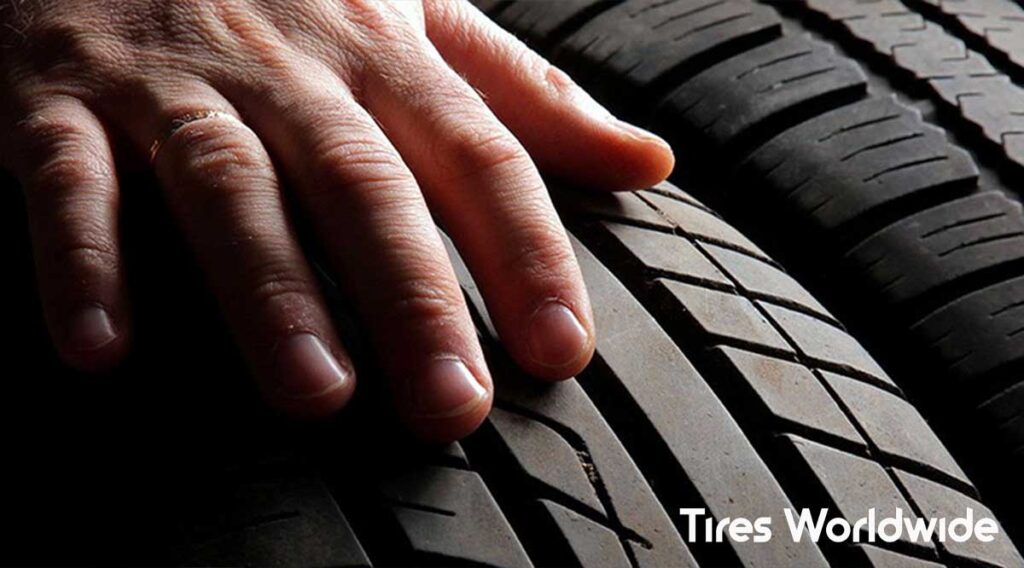
Here’s the good news: once you understand why tires wear the way they do, stopping those problems becomes way easier. Most uneven tire wear isn’t random at all. It comes from habits, maintenance routines, and tiny issues that sneak up on you over time.
The best part? Preventing tire wear doesn’t take a lot of work. You just need a simple routine, a quick monthly check, and a few smart driving habits. Do that, and your tires will last way longer — and your car will feel better every day you drive it.
Let’s talk about how to keep those tires healthy from now on.
Creating a Tire Maintenance Routine
You don’t need a complicated checklist. You just need a simple routine you can stick to. Think of it like brushing your teeth — small steps add up.
Here’s a routine anyone can follow:
- Check your tire pressure once a month
- Look at the tread for bald spots or uneven wear
- Rotate your tires every 5,000–7,500 miles
- Get an alignment check at least once a year
- Inspect tires after long road trips or hitting a pothole
These small habits prevent almost every major tire issue. And they take only a few minutes.
Seasonal Tire Care Tips
Weather affects tires more than most people think.
Here are quick seasonal reminders:
- Cold weather: Tires lose air faster
- Hot weather: Overinflation becomes more common
- Winter roads: More potholes = more alignment issues
- Summer heat: Tires wear quicker on long drives
Even small changes in temperature can drop or raise tire pressure a lot. That’s why checking PSI during weather changes is a big deal.
Choosing the Right Tires
Picking the right tires makes a huge difference in wear. Not all tires are built the same, and using the wrong type can cause uneven wear, noise, or poor handling.
Here’s what to look for:
- All-season tires: Great for most everyday drivers
- Performance tires: Better grip, but they wear faster
- Touring tires: Smooth ride and long tread life
- Load index: Make sure the tire matches the weight of your car
- Speed rating: Pick one that fits how you actually drive
Cheap, low-quality tires might save money upfront, but they usually wear out quicker and cause more problems.
Why Quality Matters for Tire Wear
Better-quality tires are made from stronger rubber compounds. They resist heat, stay balanced longer, and handle bumps better. That means less uneven wear and more driving miles.
You don’t always need the most expensive tire — but the super cheap ones can cost you more in the long run.
Driving Habits That Reduce Wear
The way you drive affects your tires more than you think. Even small habits can wear tires down faster.
If you want to keep your tires in good shape, try doing the following:
- Avoid hard braking when possible
- Don’t take turns too fast
- Speed bumps? Slow down
- Avoid hitting curbs when parking
- Don’t overload your vehicle
- Keep your wheels pointed straight when stopping
Smooth driving = smooth tire wear.
Aggressive driving = early tire replacement.
Conclusion
Understanding tire wear pattern meaning helps you catch small problems before they become expensive repairs. Each wear pattern has a cause — and now you know exactly what to look for! By checking your tires regularly, keeping the right PSI, getting alignments, and driving with care, you’ll stay safe, save money, and extend your tire life. Ready to give your tires a closer look? Your car will thank you!