Tire Penny Test: How to Check Your Tire Tread Depth
Did you know that worn-out tires are a factor in thousands of accidents every year? That’s wild, especially when there’s a simple trick anyone can use at home to spot a bad tire in seconds.
If you’ve ever heard someone mention the tire penny test and wondered what the heck that is, you’re in the right place. In this guide, we’ll walk through how this simple test works, why tread depth matters so much for safety, and how to tell if it’s time to replace your tires before they become dangerous.
We’ll keep things super simple. No mechanic jargon. Just you, a penny, and a clear way to check if your tires are still safe for the road. By the end, you’ll know exactly how to do the tire penny test, what your results mean, and what to do next if your tread is too low!
What Is the Tire Penny Test?
The tire penny test is a super simple way to check if your tires are still safe to drive on.
You don’t need a shop. You don’t need a fancy tool.
You just need a penny and a minute of your time.
Your tire tread is what helps your car grip the road.
When the tread wears down, it gets harder to stop, especially in rain or snow.
The tire penny test uses Abraham Lincoln’s head on a penny to give you a quick “pass or fail” check on that tread.
If the tread still covers part of Lincoln’s head, you’re probably above the legal minimum.
If you can see all of his head, including his hair, your tread is too low, and it’s time to think about new tires.
Now let’s break this down step by step.
Simple Explanation of the Penny Test
So how does this thing actually work?
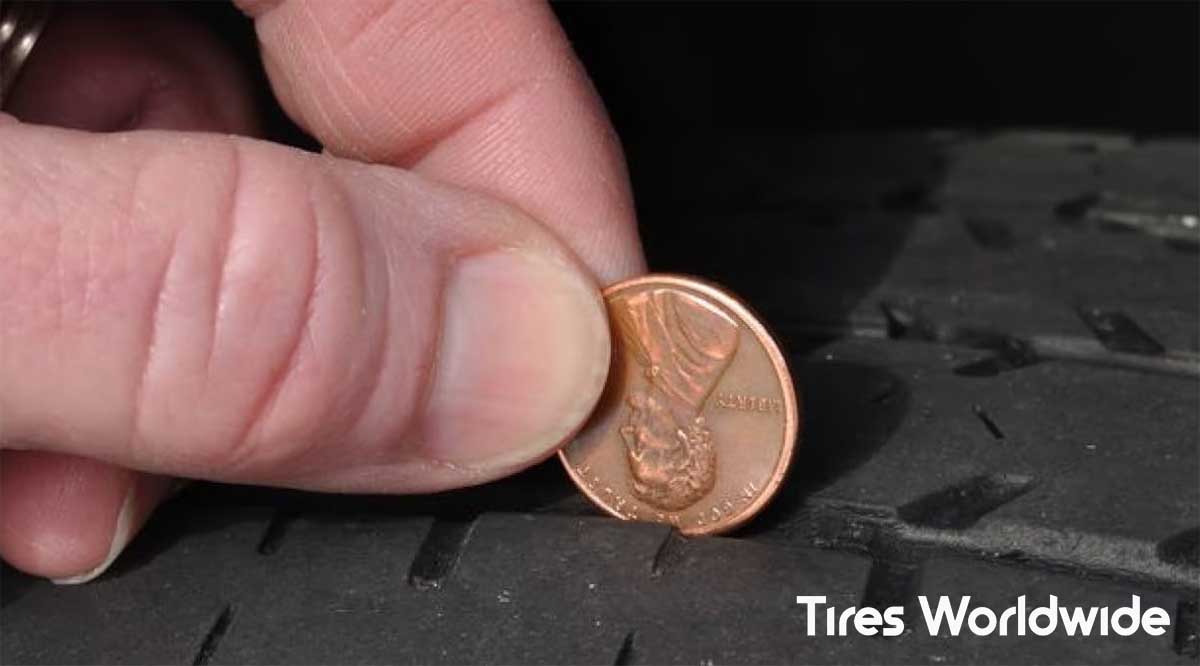
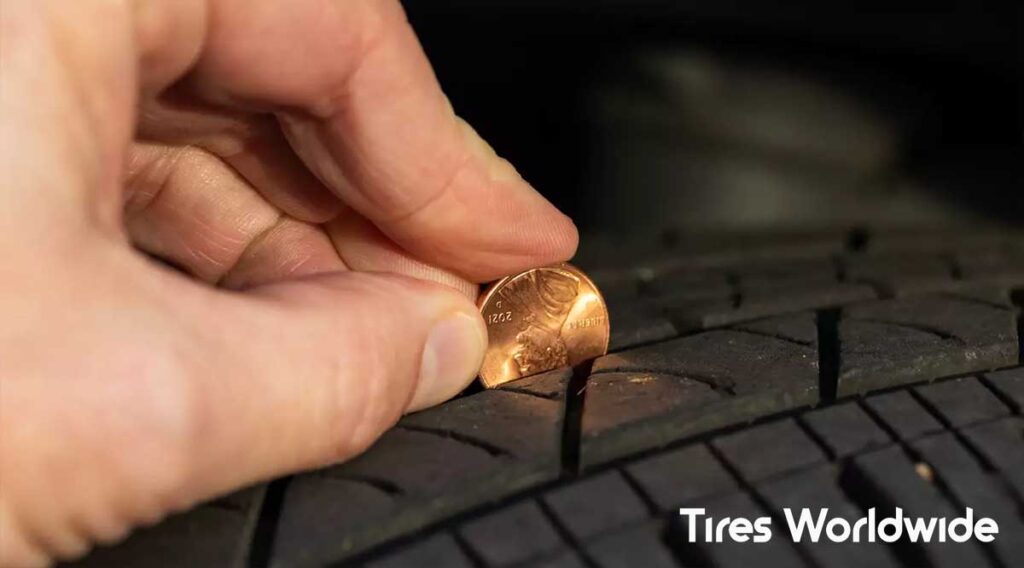
Take a regular U.S. penny.
Hold it so Lincoln’s head is upside down.
Then slide the penny into one of the grooves on your tire tread.
If the tread covers part of Lincoln’s forehead, your tire still has some life left.
If you can see all of his head, including the top of his hair, your tread is worn down to about 2/32 of an inch or less.
That’s the point where many places consider the tire “legally worn out.”
The best part?
You can do this in your driveway, at a gas station, or in a parking lot.
No appointment, no tools, no stress.
Just remember to:
- Check more than one spot on the tire
- Look at the inner, middle, and outer sections
- Repeat on all four tires
That way, you don’t miss any spots where the tread might be wearing faster.
Where the Penny Test Came From
The penny test didn’t come from a big machine or a fancy lab.
It came from a simple idea: most people have a penny, and Lincoln’s head is a handy guide.
In the U.S., many states use 2/32 of an inch as the legal minimum tread depth.
Below that, your tires are considered unsafe.
By chance, the distance from the edge of a penny to the top of Lincoln’s head is close to that same height.
So someone smart realized, “Hey, we can use this as a quick check.”
Over time, the penny test spread through drivers, mechanics, and safety groups.
It became a kind of “household hack” for tire safety.
If you want to read more about what safe tread depth looks like, you can check the National Highway Traffic Safety Administration (NHTSA) here:
https://www.nhtsa.gov/equipment/tires
Many tire makers also explain tread depth and show pictures, which can help you match what you see on your own tires.
You don’t need to memorize all the numbers.
Just remember: if Lincoln’s head is fully visible, that’s your red flag.
When You Should Use the Tire Penny Test
You don’t have to wait for a big problem to use the tire penny test.
In fact, it works best as a quick check you do from time to time.
Here are some good moments to do it:
- Before a long road trip
- When the seasons change, especially before heavy rain or snow
- If your car starts to feel “slippery” in the rain
- If braking feels longer than usual
- If you notice the tires look smooth or shiny in spots
It’s also smart to test your tires every month or so, just like checking tire pressure and oil.
It takes less time than scrolling social media for a minute.
If you drive a lot on highways, rough roads, or in hot weather, your tread can wear out faster.
So doing the penny test more often can help you catch worn tires early.
Think of it like a quick health check for your car.
One penny, a few seconds, and you get a pretty good idea if your tires are still safe or if it’s time to plan for a new set.
How to Do the Tire Penny Test Step-by-Step
Doing the tire penny test is honestly one of the easiest car checks you’ll ever do.
You don’t need to be a car expert. You don’t need tools.
You just need a penny, your eyes, and maybe about 60 seconds.
Below, I’ll break it all down so you can follow along without guessing.
Let’s make this as simple as humanly possible!
Tools You Need Before You Start
Good news: you barely need anything.
Here’s your tiny “tool list”:
- A regular U.S. penny (any year works)
- Decent lighting so you can see the tread groove
- Optional: gloves or a rag if your tires are dirty
That’s it. Seriously.
If you’ve got a penny, you’re good to go.
A lot of people do this test at a gas station or in their driveway.
Just make sure you can see the tread clearly.
If it’s too dark, grab your phone flashlight.
Where to Place the Penny in the Tire Tread
Now comes the fun part.
Take your penny, turn it so Lincoln’s head is upside down, and press it into one of the grooves in your tire.
But here’s a mistake a lot of people make:
They only check one spot.
Don’t do that!
Tires don’t always wear evenly.
So you want to check:
- The inside edge
- The center of the tread
- The outside edge
- A couple different spots around the tire
This helps catch uneven wear, which can be a sign you need alignment or rotation.
Just push the penny straight down into the groove.
No need to force it.
You just want to see how far the tread covers Lincoln’s head.
Understanding the Penny Test Results
Alright, this part is important.
Here’s what your results mean:
If you can see all of Lincoln’s head:
Your tread is low — about 2/32 of an inch or less.
This means your tires are worn out, unsafe, and need to be replaced ASAP.
If the tread covers part of Lincoln’s head:
Good news — your tread is still above the legal minimum.
But if it’s barely covering him, start planning for a replacement soon.
If the tread covers most of his forehead:
You have healthy tread.
You’re not in the danger zone yet.
Basically, the more of Lincoln’s head you can see, the worse your tread is.
Common Mistakes People Make with the Penny Test
Let’s avoid the rookie mistakes so your test is accurate.
Here are the ones I see all the time:
Only checking one groove
Tires can wear unevenly.
You might miss a bald spot if you don’t test multiple areas.
Testing on wet or muddy tread
Water or dirt can make the tread look deeper than it is.
Wipe the area first if needed.
Not checking all four tires
Each tire wears differently depending on driving style and alignment.
Front tires wear faster on most cars, so check everything.
Reading the penny too fast
Take a second to really look.
Is Lincoln’s hair fully visible or just a tiny bit?
That tiny difference matters.
Ignoring weird wear patterns
If one side of the tire is bald but the other side has tread, that’s a sign of alignment problems — not just old tires.
The penny test tells you the tread depth, but uneven tread tells you something else is going on with your car.
What Tread Depth Means for Your Safety
Tread depth isn’t just some boring car term. It’s a huge part of what keeps your car glued to the road.
You might not think about your tread every day, but trust me… it matters a lot more than most people realize.
Your tires are the only thing touching the road — four small patches of rubber holding up thousands of pounds of metal.
And when that tread gets low? Everything gets a little riskier.
Braking. Turning. Driving in rain. Even your fuel economy can take a hit.
This section breaks down why tread depth is such a big deal and what it means for your safety every time you get behind the wheel.
Why Tire Tread Is So Important
Think of your tire tread like the “grip pattern” on your shoes.
When the pattern wears out, you slip easier, right?
Same idea with your tires.
Your tread does a few important jobs:
- Helps your tires grip the road
- Pushes water away so you don’t slide
- Gives you control during turns
- Helps your car stop faster
When your tread is fresh, you feel solid on the road.
When it’s worn down, your car starts losing traction — especially in rain or snow.
Low tread can make your car feel like it’s floating or sliding when you least expect it.
That’s why checking tread isn’t optional. It’s about keeping yourself safe.
If you want to dig deeper into why tread matters, the NHTSA explains it in simple terms here:
https://www.nhtsa.gov/equipment/tires
Legal Minimum Tread Depth vs. Safe Tread Depth
Most states in the U.S. have a legal minimum tire tread depth of 2/32 of an inch.
If your tread hits that point, your tire is considered “legally worn out.”
That means it’s no longer safe for daily driving.
But here’s something people don’t always understand:
Legal doesn’t always mean safe.
A tire with 2/32″ of tread left might pass the law, but it’s still risky — especially in wet conditions.
Here’s a quick breakdown that’s easier to remember:
- 2/32″ = bare minimum (unsafe in rain)
- 4/32″ = okay but getting low (start planning)
- 6/32″ or more = healthy tread for most driving
If you live somewhere with heavy rain or snow, your “safe minimum” needs to be even higher because slippery roads demand more tread.
Some drivers use the quarter test for that reason — it checks for 4/32” instead of 2/32”.
But more on that in the next big section.
How Low Tread Affects Braking and Handling
Low tread doesn’t just make your tires look bald.
It changes the way your whole car drives.
Here’s what low tread does:
Longer stopping distance
Your tires can’t grab the road the same way, so your car takes longer to stop.
Higher chance of hydroplaning
When it rains, your tread pushes water out of the way.
If the grooves are too shallow, water builds up under the tires and you slide.
It happens fast and it’s scary.
Poor traction in snow or ice
With worn tread, your car loses its ability to “bite” into snow.
That leads to slipping, fishtailing, or getting stuck.
Less control in emergency moves
Quick turns, sudden stops, or swerving around something becomes harder with bad tread.
When you think about it, tread is like a safety net.
When it’s gone, you’re basically gambling every time you drive in bad weather.
Tire Penny Test vs. Other Ways to Check Tread
The tire penny test is awesome because it’s quick, free, and takes almost no effort.
But it’s not the only way to check your tread.
There are a few other methods people use, and some of them give you even more detail.
Don’t worry — none of this is complicated.
I’ll break down each method so you can decide which one works best for you.
The penny test is great, but sometimes you need a little more info than what a single coin can tell you.
Using a Quarter Test (Alternative Method)
The quarter test is like the penny test’s big brother.
It works almost the same way, but it checks for a deeper amount of tread.
Here’s the difference:
- The penny test checks for 2/32″
- The quarter test checks for 4/32″
You use George Washington’s head the same way you’d use Lincoln’s.
Why do people use a quarter?
Because 2/32″ is the legal minimum, but 4/32″ is the safer minimum — especially if it rains a lot where you live.
Here’s how to do it:
- Hold the quarter upside down
- Put it into the tread
- If you can see all of Washington’s head, your tread is below 4/32″
This means the tire isn’t unsafe yet… but it’s getting close.
Think of the quarter test as your “warning stage.”
A lot of mechanics actually recommend the quarter test over the penny test because it catches problems earlier.
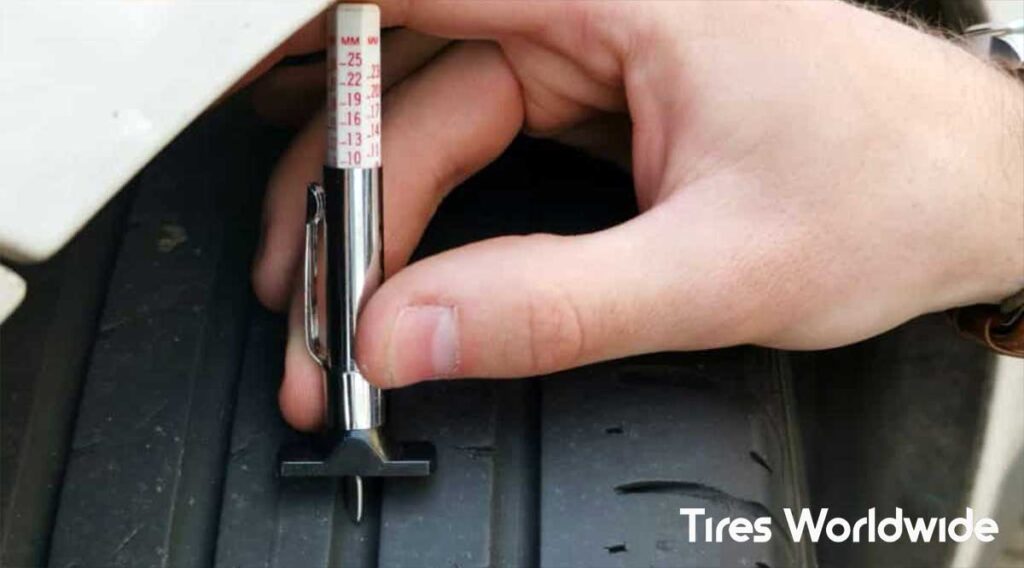
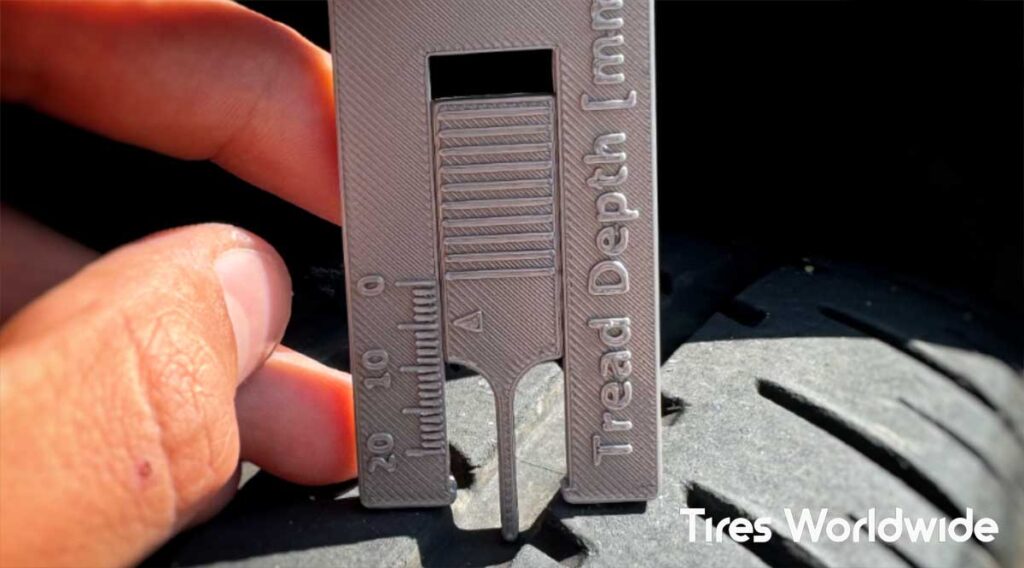
Using a Tire Tread Depth Gauge
If you want the most accurate reading — the kind shops use — you can grab a tread depth gauge.
It’s a tiny tool that measures your tread in seconds.
They’re cheap too… usually under ten bucks.
Here’s why some people prefer a gauge:
- It gives an exact number
- You can check every groove
- It’s simple and takes no guessing
You just press the tool into the tread, and it shows you the depth in 32nds of an inch.
This helps you see if all areas of the tire are wearing the same or if one side is fading faster.
If you want a basic, reliable one, here’s an example from Amazon:
https://www.amazon.com/GODESON-88702-Smart-Color-Coded/dp/B0793HMWP1/
(Not an affiliate link — just a simple option.)
Using a gauge takes maybe 20 seconds per tire, but it gives you super clear results without depending on eyesight.
Built-In Tread Wear Indicators on Tires
Believe it or not, your tires already come with their own “warning system.”
Most modern tires have tread wear bars molded right into them.
Here’s how they work:
- Look inside the grooves of your tire
- You’ll see small raised lines running across
- When your tread wears down to the level of those bars, your tire is worn out
These bars sit at 2/32″, the same level the penny test checks for.
So when the tread is flush with the bar, that’s your sign — the tire is done.
A lot of people never notice these bars because they’re subtle.
But they’re super helpful and way more accurate than guessing by eye.
Still, it’s smart to use both the wear bars and the penny test.
Sometimes the tire wears unevenly, and the bars don’t show the full picture.
If you want a clear image of what wear bars look like…
When the Tire Penny Test Says It’s Time to Replace Your Tires
So you did the tire penny test… and maybe the results weren’t great.
That’s okay — it happens to all of us.
Tires wear out over time, and catching it early is way better than finding out too late on the highway in the rain.
This section breaks down what to look for, how fast you should act, and how to choose good replacement tires without getting overwhelmed.
Let’s make this super simple so you know exactly what to do next.
Clear Signs You Need New Tires
The penny test is your first big clue, but it’s not the only sign your tires are ready for retirement.
Here’s what to watch for:
1. You see all of Lincoln’s head on the penny
This is the classic “yep, they’re worn out” moment.
If the tread no longer covers any part of Lincoln’s forehead, your tire is at 2/32″ or lower — and that’s unsafe.
2. Bald spots or smooth patches
Even if part of the tire has decent tread, a bald section means trouble.
Your tire isn’t gripping the road evenly.
3. Cracks in the rubber
Also called “dry rot.”
This happens from age, sun exposure, or under-inflated tires.
Cracks weaken the tire and can lead to blowouts.
4. Bulges or bubbles on the sidewall
This is a huge red flag.
If you see a bulge, the structure of the tire is damaged, and it could burst without warning.
5. Wires or cords showing
If you can see metal or threads, stop driving the car immediately.
That tire is dangerously worn.
You don’t have to see all these signs.
Just one is enough to tell you the tire needs to go.
How Soon to Replace Tires After a Failed Penny Test
Here’s the truth:
Once your tire fails the penny test, you shouldn’t wait.
Driving on low tread is risky, especially in rain, snow, or at high speeds.
Here’s what to keep in mind:
- If your tread is at or below 2/32″, replace the tire right away
- If it’s close, start planning within the next few weeks
- If weather is bad, move even faster — low tread and rain don’t mix
Even if you drive slowly or “just around town,” worn-out tires can still slip, skid, or blow out.
Your stopping distance gets longer.
Your control gets weaker.
And the cost of waiting can be a lot worse than the price of getting new tires.
If you want real accident stats linked to worn tires, the NHTSA has a short report here:
https://www.nhtsa.gov/sites/nhtsa.gov/files/documents/812323_tire_related_crash_facts.pdf
Choosing the Right Replacement Tires
Shopping for tires doesn’t have to feel confusing.
You just need to know the basics so you don’t buy the wrong type.
Here’s what to look for:
1. All-Season Tires
Good for everyday driving.
Work well in rain, warm weather, and light snow.
Most people choose these.
2. Winter Tires (Snow Tires)
Made for real snow and ice.
Stay soft in freezing temps so you don’t slip.
If you live somewhere with heavy winter, these are worth it.
3. Performance Tires
Good grip and sharp handling.
Great for sporty cars but wear out faster.
Not everyone needs these.
4. All-Weather Tires
A mix between all-season and winter tires.
Good for places with long winters but not extreme snow.
When choosing a tire, also check:
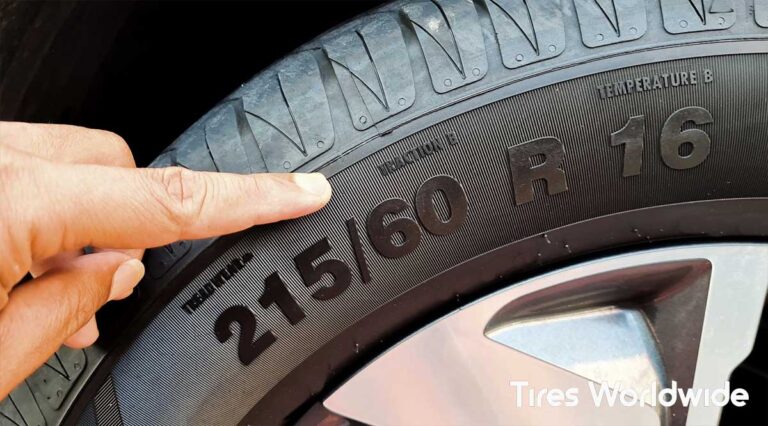
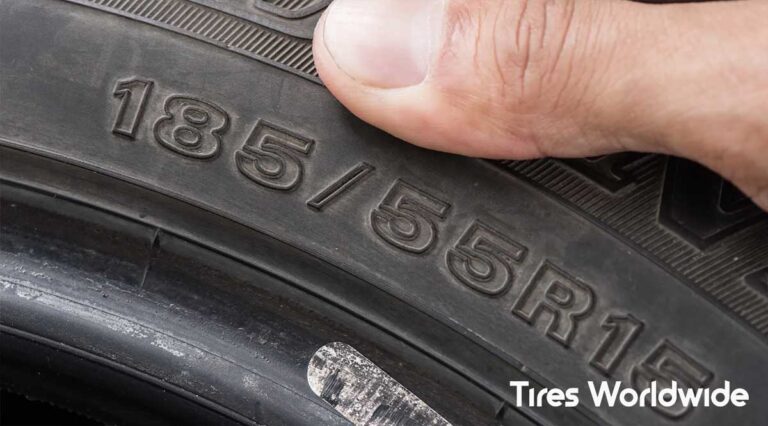
- The correct size (printed on your tire sidewall)
- The speed rating
- The load rating
- The warranty
Don’t feel pressured to buy the most expensive tires.
Just get the type that matches your car and your driving style.
Quality matters, but price doesn’t always equal safety.
How to Prevent Your Tread from Wearing Out Too Fast
Replacing tires isn’t cheap, so the smartest thing you can do is slow down how fast your tread wears out.
The good news?
You have way more control over this than you think.
A few simple habits can make your tires last months — even years — longer.
And none of it is complicated.
Let’s break down the easiest ways to keep your tread healthy and your tires rolling smoothly.
Proper Tire Rotation and Alignment
Your tires don’t all wear at the same speed.
The front tires usually wear out faster because they handle the steering and more weight from the engine.
That’s why rotating your tires is such a big deal.
Rotation just means moving the tires from front to back and switching sides so they wear evenly.
Most shops recommend rotating every 5,000 to 8,000 miles.
You can do it during your oil change so you don’t forget.
Why it matters:
- It prevents uneven tread wear
- It helps all four tires last longer
- It keeps your car driving straight and smooth
Now let’s talk about alignment — another huge factor.
If your alignment is off, even a tiny bit, your tires can wear out fast on one side.
This can happen from hitting potholes, curbs, or driving on rough roads.
If your car pulls to one side or your steering wheel isn’t centered, you probably need an alignment.
A good alignment stops your tires from dragging or wearing unevenly.
It can literally add months to your tire life.
Keeping the Right Tire Pressure
Most people forget this part, but tire pressure affects tread more than almost anything else.
Here’s why:
- Underinflated tires wear the edges faster
- Overinflated tires wear the center faster
- Wrong pressure makes your car burn more gas
- Extreme temperatures can change pressure by several PSI
You should check your tire pressure at least once a month, and always before long road trips.
You can use a cheap gauge, or even the air machines at gas stations — many of them show your PSI as you fill.
To find your correct tire pressure:
- Look at the sticker inside your driver’s door
- Or check your owner’s manual
Don’t trust the number printed on the tire — that’s the max pressure, not the recommended pressure.
Driving Habits That Kill Your Tires
Believe it or not, how you drive affects your tread just as much as road conditions.
Here are the habits that wear tires out the fastest:
Hard braking
Slamming the brakes over and over scrapes away tread.
Fast acceleration
Spinning your wheels burns rubber — literally.
Sharp turns
Fast cornering puts pressure on the tire edges.
Hitting potholes or curbs
This can ruin your alignment and damage the tire.
Driving on low pressure
This makes the tire flex too much and wear unevenly.
Small changes make a big difference:
- Brake gently
- Accelerate smoothly
- Avoid potholes when you can
- Don’t turn your steering wheel while the car is stopped
Driving smoother doesn’t just save your tires — it can save gas and make your whole car last longer.
Seasonal and Weather Considerations for the Tire Penny Test
Weather changes everything when it comes to tire safety.
A tire that feels “good enough” in dry weather can turn into a total nightmare the moment it rains or snows.
That’s why the tire penny test becomes even more important when the seasons start shifting.
Different weather needs different tread depths.
So in this section, we’ll break down how the penny test fits into rainy days, snowy seasons, and long road trips — because each one affects your tires in its own way.
Testing Tread for Rainy and Wet Conditions
Wet roads are where worn-out tread shows its true danger.
Even a little bit of low tread can make your car slide way easier than you expect.
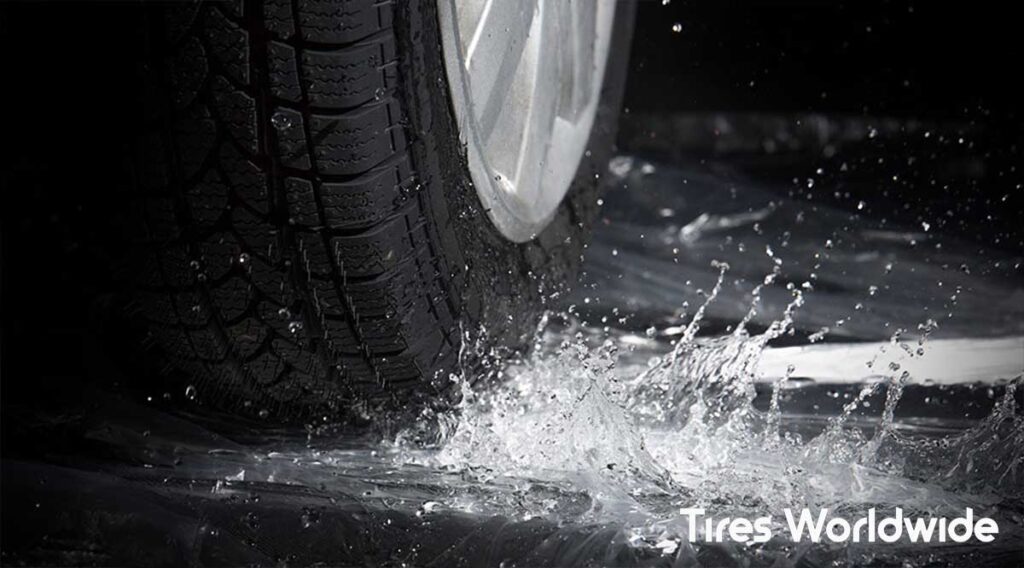
When it rains, your tires have one job: push water out of the way.
The grooves in your tread act like tiny channels that move water so the rubber can stay in contact with the road.
But if your tread is too shallow?
The water can’t escape fast enough.
This makes your car “float” on top of the water instead of gripping the pavement.
That’s called hydroplaning, and trust me, it feels awful — like you’ve lost all control for a second or two.
Here’s where the penny test helps:
- If you can see all of Lincoln’s head, your risk of hydroplaning skyrockets
- Even 4/32″ tread (barely covering Washington on a quarter) can be risky in heavy rain
- The deeper the tread, the safer you are in wet weather
If you live somewhere with lots of rain or storms, do the penny test more often.
It only takes seconds, but it gives you real peace of mind before you hit the road.
Tread Depth for Snow and Winter Driving
Driving in snow is a whole different world.
Wet roads are scary, but snowy roads require even more tread to stay safe.
Here’s the simple truth:
The penny test isn’t enough for winter conditions.
Yes, it can tell you if your tires are legally worn out… but in snow, “legal” isn’t always safe.
For winter roads:
- You want at least 6/32″ of tread
- The penny test checks for 2/32″, which is way too low for snow
- Even “okay” tread can slip on ice or packed snow
If Lincoln’s head is showing even a little, winter roads can become dangerous fast.
That’s why many drivers switch to winter tires during cold months — they’re designed with deeper tread and softer rubber.
Bottom line?
If winter is coming, don’t rely only on the penny test.
Use it as a quick check, but remember that snowy conditions demand more tread.
Long Road Trips and Tread Checks
Planning a long road trip?
This is one of the BEST times to do the tire penny test.
Here’s why:
- Long trips mean long hours of heat on your tires
- Highway speeds make low tread even more dangerous
- Blowouts happen more often on long trips
- You don’t want tire problems miles away from home
Before any road trip, you should:
- Check all four tires with the penny test
- Look for cracks, bulges, or bald spots
- Check your tire pressure
- Make sure your spare tire is inflated
There’s nothing worse than being stuck on the side of the highway with a flat — especially if you had no idea your tread was low.
A fast penny test can prevent all that stress.
Do yourself a favor and check your tread before you pack the car.
It could save your trip… and your tires.
Conclusion
The tire penny test is one of those simple tricks that can literally save your life—and it costs you just a single cent. Pretty good deal, right? With nothing more than a penny and a couple of minutes, you can quickly check your tire tread depth, spot dangerous wear, and decide if it’s time to replace your tires.
We walked through what the test is, how to do it step-by-step, how to read the results, and why tread depth matters so much for braking, traction, and safety. We also compared the penny test to other methods like quarters, tread gauges, and wear bars, and talked about how good habits like tire rotation, proper pressure, and smooth driving can extend your tread life.
Now it’s your turn. Grab a penny, head out to your car, and test your tires today. If the tread fails the penny test, don’t wait—start planning your tire replacement. Your safety, your passengers, and everyone else on the road depend on it.